
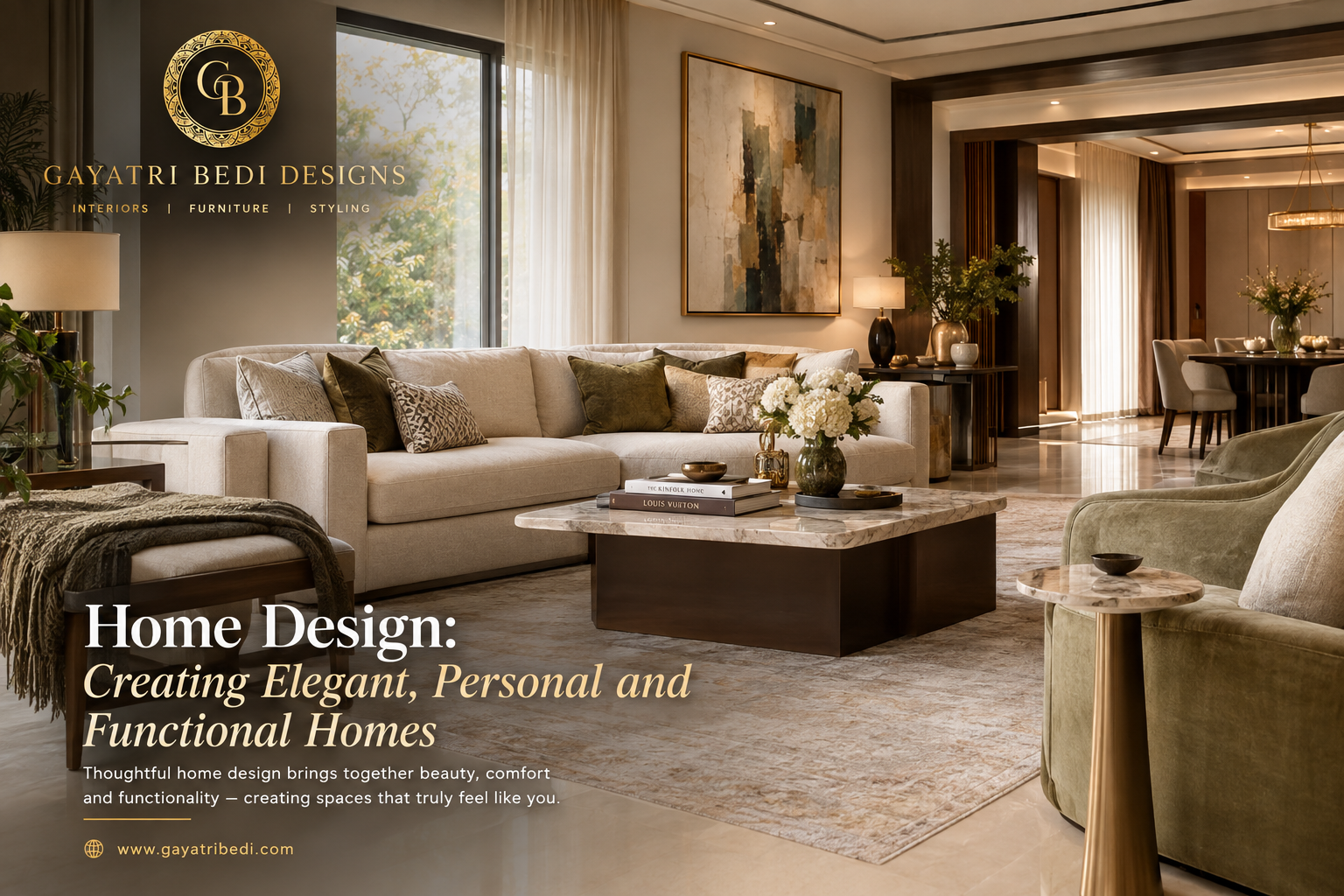
A beautiful home is not created simply by choosing attractive furniture, expensive materials, or following the latest interior trends. Good home design begins with understanding how a space needs to function, how people move through it, what they value, and what kind of atmosphere they want to experience every day. A thoughtfully designed home brings together architecture, furniture, lighting, materials, colours, textures, storage, artwork, and décor in a way that feels natural and personal.
For homeowners exploring home design Chandigarh, the process can be an opportunity to create much more than a visually appealing interior. It can become a way of expressing personality, lifestyle, comfort, and individuality through the spaces where everyday life takes place. Gayatri Bedi Designs approaches residential interiors with an emphasis on personalised planning, refined detailing, bespoke furniture, functionality, and carefully considered styling. The objective is to create interiors that feel sophisticated while remaining connected to the people who live in them.
What Does Home Design Really Mean?
Home design is the process of shaping an interior around the people, architecture, functions, and experiences that define a residence. It involves much more than selecting colours or deciding where a sofa should be placed. It begins with understanding the structure of the property and continues through space planning, furniture selection, material specification, lighting, storage, finishes, decorative elements, artwork, and final styling.
A successful home design should make a space feel effortless. Rooms should connect naturally, furniture should have appropriate proportions, circulation should remain comfortable, storage should be practical, and materials should complement one another. At the same time, the home should have enough personality to avoid feeling generic.
This balance between functionality and character is one of the most important aspects of residential interiors. A room can look impressive in photographs, but if the furniture is uncomfortable, the storage is insufficient, the lighting is poorly planned, or movement through the space feels awkward, the design has not fully solved the needs of the homeowner.
Good design considers how the home will actually be used.
Why Personalisation Is Important in Home Design
Every homeowner has a different lifestyle. Some families regularly host guests and need generous entertainment areas, while others prefer intimate spaces designed around quiet family time. Some homeowners collect artwork, some prioritise books and display pieces, while others need extensive storage or dedicated areas for work, dressing, relaxation, and hobbies.
This is why home design should not follow a single formula.
Personalisation starts by understanding the homeowner. What does a typical day look like? How does the family use the living room? Is the dining area used every day or mainly for entertaining? Does the bedroom need additional storage? Is there a requirement for a home office? Which existing pieces should remain? What materials and colours make the homeowner feel comfortable?
These questions help transform a house into a more meaningful environment.
Gayatri Bedi Designs focuses on developing residential interiors around individual requirements rather than simply reproducing a predetermined style. This approach allows furniture, materials, colours, decorative details, and styling to respond to the character of each project.
Planning the Layout Before Choosing Furniture
One of the most important stages of home design is space planning. Before selecting furniture, the designer needs to understand how people will move through the rooms and how different areas will connect.
The placement of a sofa affects circulation. The position of a dining table influences movement between the kitchen and dining area. A bed determines the location of bedside tables, wardrobes, lighting, and walking space. Storage needs to be accessible without interrupting the room.
A strong layout makes these relationships feel natural.
Poor planning can make even a large home feel crowded. Furniture may technically fit inside a room but still create uncomfortable circulation. On the other hand, thoughtful planning can make a relatively compact space feel open, organised, and comfortable.
This is why home design should begin with the space itself rather than with individual products. Once the layout is established, furniture and decorative elements can be selected according to the dimensions and requirements of the room.
Creating a Connected Design Language
A home usually contains several different spaces, each with its own purpose. The living room may be more formal, the bedroom more relaxed, the dining area more social, and the study more focused. However, these spaces should still feel like parts of the same residence.
A connected design language can be created through repeated materials, complementary colours, similar furniture detailing, consistent metal finishes, related wood tones, coordinated fabrics, and a considered lighting approach.
This does not mean every room needs to look identical.
In fact, excessive repetition can make a home feel predictable. Instead, each room can have its own personality while sharing certain visual elements with the rest of the residence. This creates variety without visual confusion.
For homeowners considering home design Chandigarh, this approach can be particularly valuable when designing larger residences with multiple rooms and different functional zones. The design needs to provide individuality while maintaining a sense of continuity throughout the property.
The Role of Bespoke Furniture in Home Design
Furniture is one of the strongest elements influencing the appearance and usability of a home. While ready-made furniture can work effectively in certain situations, bespoke furniture offers greater control over dimensions, materials, finishes, proportions, and functionality.
A custom sofa can be designed around the exact dimensions of a living room. A console can be created specifically for an entrance wall. A dining table can be proportioned according to the size of the dining area and the number of people using it. A bed, wardrobe, cabinet, or sideboard can be developed to respond to the architectural details of a particular room.
Bespoke furniture therefore becomes more than an individual object. It becomes part of the overall design.
Gayatri Bedi Designs combines interior design with bespoke furniture, allowing furniture pieces to support the wider visual and functional direction of a residence. This can help create a more cohesive environment where the furniture does not appear disconnected from the architecture or surrounding materials.
Choosing Materials for a Refined Home
Materials have a major influence on the atmosphere of a residence. Wood can introduce warmth and natural character. Stone can add depth and permanence. Fabrics can soften a room, while metal details can introduce subtle contrast. Glass and reflective surfaces can contribute to a sense of openness when used thoughtfully.
The key is not simply selecting expensive materials. It is understanding how materials interact.
A beautiful stone may not work effectively if it conflicts with the surrounding flooring. A strong wood finish can become overwhelming if repeated excessively. A textured wall may create an attractive focal point, but too many competing textures can reduce visual clarity.
Good home design therefore involves editing.
Materials should be selected according to the overall concept, the architecture, the lighting conditions, the furniture, and the lifestyle of the homeowner.
Lighting Can Transform a Home
Lighting is often underestimated during the early stages of home design, yet it can completely change the character of a room.
General lighting provides functional illumination, while task lighting supports specific activities. Accent lighting can highlight artwork, architectural features, furniture, or decorative elements. Decorative fixtures can also become design features in their own right.
In a living room, layered lighting can create different moods for entertaining, relaxing, reading, or watching television. In a bedroom, softer lighting can support a calm atmosphere. In a dining room, carefully positioned lighting can enhance the table and create a more intimate setting.
Natural light also needs to be considered. Window placement, curtains, reflective surfaces, colours, and furniture positioning can influence how daylight moves through the interior.
The best lighting design does not necessarily draw attention to itself. Instead, it supports the atmosphere and functionality of the room.
Colour and Texture in Home Design
Colour is one of the most visible elements of an interior, but it should be considered alongside texture, material, lighting, and furniture.
A neutral palette can create a calm and timeless foundation. Deeper shades can introduce drama and intimacy. Softer colours can make a room feel relaxed, while carefully selected accents can provide personality.
Texture adds another layer. Upholstery, rugs, curtains, wood, stone, wall treatments, metal, artwork, and accessories can all contribute different tactile and visual qualities.
A room with a restrained colour palette can still feel rich when it includes a thoughtful combination of textures. Similarly, a colourful room can feel balanced when the materials and proportions are carefully controlled.
Home design becomes more sophisticated when colour and texture are treated as parts of a larger composition rather than isolated choices.
Designing Every Room With Purpose
Each room in a home should have a clear reason for existing and a clear relationship with the lifestyle of its occupants.
Living Room Design
The living room often becomes the social heart of the home. Seating should encourage conversation while allowing comfortable movement. The scale of sofas, chairs, tables, rugs, lighting, and artwork should work together.
A living room can feel luxurious without being overloaded with decorative objects. Carefully selected furniture, artwork, lighting, and materials can create a more composed environment.
Bedroom Design
A bedroom should support rest, privacy, comfort, and personal routines. The bed becomes the visual anchor, while bedside tables, lighting, wardrobes, seating, curtains, rugs, and decorative details build the surrounding environment.
Storage should be planned carefully so that functionality does not compromise the calm character of the room.
Dining Room Design
The dining room should provide sufficient space around the table while maintaining a comfortable relationship with adjoining areas. Lighting can become an important focal point, while chairs, table materials, artwork, and accessories contribute to the overall atmosphere.
Foyer and Entry Design
The entrance creates the first impression of a home. A thoughtfully designed foyer can establish the visual language for the rest of the residence through furniture, artwork, lighting, mirrors, materials, or architectural detailing.
Home Office Design
A home office needs to balance productivity with comfort. Desk proportions, seating, storage, lighting, acoustics, and background aesthetics should all be considered according to the homeowner’s working habits.
Home Design Chandigarh: Creating Homes With Local Character and Individuality
When homeowners search for home design Chandigarh, they are often looking for interiors that combine contemporary elegance with comfort and individuality. Chandigarh residences can range from modern apartments to expansive independent homes, villas, and other residential properties, each bringing different architectural and spatial requirements.
A successful design should respond to the actual property rather than forcing the same aesthetic onto every project.
The architecture, natural light, room proportions, surrounding environment, lifestyle, and requirements of the family should all influence the final design. For larger residences, the challenge often becomes creating enough visual interest without making the interior feel excessive.
Gayatri Bedi Designs approaches residential interiors with attention to these relationships, combining design planning, furniture, materials, styling, and detailing to create a cohesive residential experience.
The Importance of Storage in Modern Home Design
Storage is one of the practical foundations of a successful home. A beautiful room can quickly lose its appeal when everyday belongings have nowhere appropriate to go.
Storage should therefore be considered during the planning stage rather than added as an afterthought.
Built-in wardrobes, custom cabinets, concealed storage, sideboards, consoles, dressing units, and multifunctional furniture can help maintain visual order. The design should make frequently used objects accessible while allowing less frequently used items to remain discreetly stored.
Well-designed storage does not have to dominate a room. When integrated carefully with walls, furniture, materials, and architectural details, it can become almost invisible.
Artwork and Decorative Elements
Artwork and décor provide an opportunity to introduce individuality into a home. Paintings, sculptures, photographs, books, rugs, mirrors, lamps, ceramics, and collected objects can all contribute to the personality of a room.
However, decoration works best when it is intentional.
A single significant artwork can sometimes have more impact than an entire wall filled with small objects. A carefully styled console can create a stronger focal point than multiple unrelated accessories.
The objective is not to fill every empty surface. It is to create balance, rhythm, scale, and visual interest.
This final decorative layer can make an interior feel lived-in rather than simply designed.
Home Design Should Balance Beauty and Everyday Life
One of the biggest misconceptions about luxury home design is that luxury is primarily about expensive finishes. In reality, a luxurious home can be defined by the ease with which everything works.
Comfortable seating, accessible storage, appropriate lighting, well-planned circulation, quality craftsmanship, suitable materials, and personalised details all contribute to the everyday experience.
The most successful interiors often contain details that are not immediately obvious in photographs. The height of a cabinet, the depth of a sofa, the position of a switch, the opening direction of a wardrobe, or the placement of lighting can make everyday life easier.
This is where thoughtful design demonstrates its value.
From Design Concept to Finished Home
A home design concept is only the beginning. The quality of execution plays an equally important role in achieving the intended result.
Materials need to be selected and coordinated. Furniture needs to be manufactured accurately. Finishes need to be checked. Lighting needs to be installed correctly. Decorative elements need to be positioned carefully. Site conditions may require adjustments during implementation.
This is why a structured design and execution process is valuable.
Gayatri Bedi Designs works across residential interiors, bespoke furniture, styling, consultation, and project coordination, allowing different elements of a project to be considered as part of one larger design direction.
Why Thoughtful Home Design Creates Lasting Value
Trends change constantly. Colours become popular and then disappear. Furniture styles evolve. New materials enter the market. But a home designed around proportion, comfort, quality, personality, and functionality can remain relevant for much longer.
Timeless design does not mean boring design.
It means creating a strong foundation and allowing personal expression to evolve naturally. A homeowner can change cushions, artwork, accessories, rugs, or smaller furniture pieces without having to redesign the entire home.
This makes the interior adaptable while preserving its underlying character.
Creating a Home That Feels Like You
Ultimately, the purpose of home design is not to create a showroom. It is to create a place that belongs to the people living there.
A successful home should reflect personality without becoming visually chaotic. It should feel sophisticated without becoming uncomfortable. It should incorporate beautiful materials without sacrificing practicality. It should have character without relying entirely on trends.
For homeowners exploring home design Chandigarh, the most important starting point is therefore not a catalogue or a trend board. It is an understanding of how the home needs to feel and function.
At Gayatri Bedi Designs, this philosophy is expressed through personalised residential interiors, bespoke furniture, considered materials, thoughtful styling, and attention to detail. The goal is to bring all these elements together so that the finished home feels coherent, comfortable, elegant, and distinctly personal.
A well-designed home does not simply look beautiful when everything is newly installed. It continues to work beautifully as life unfolds inside it.
That is the real purpose of thoughtful home design.
