
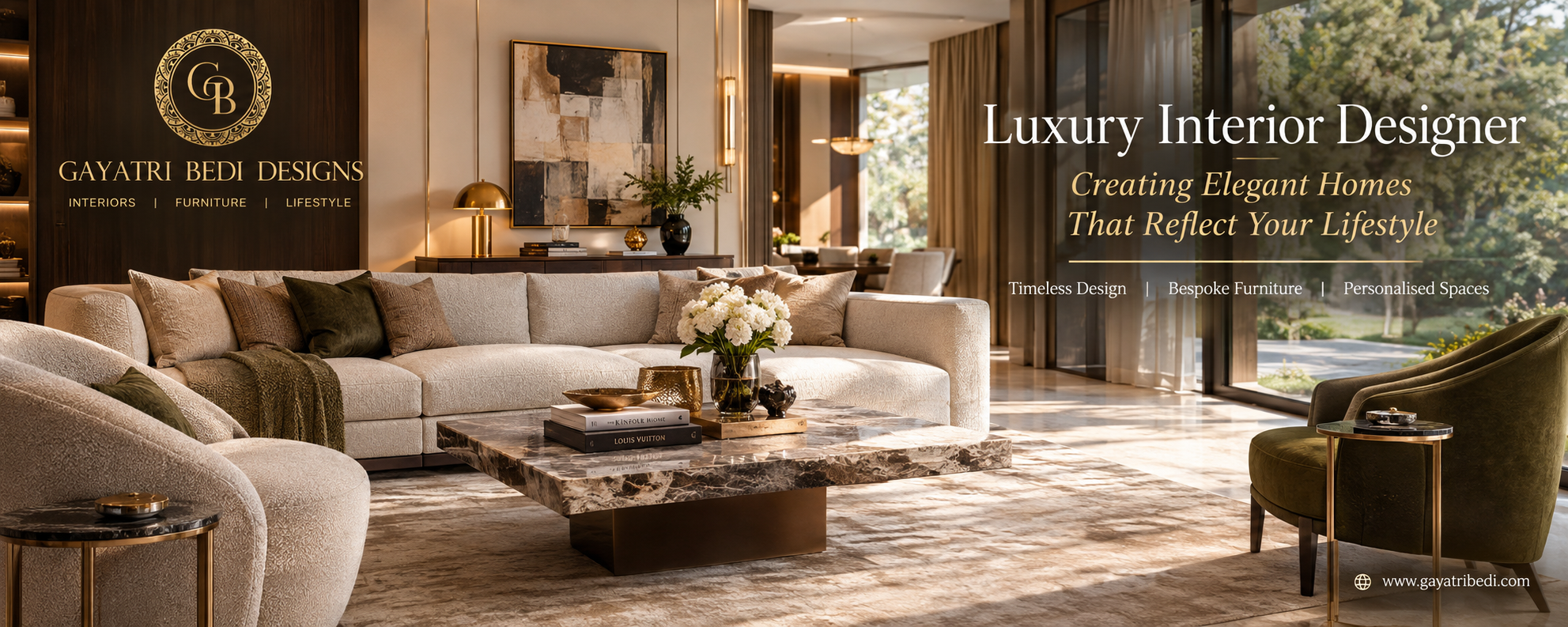
Luxury interior design is about much more than expensive furniture, premium materials, or impressive decorations. It is about creating a home that reflects your personality, supports your lifestyle, and offers a sense of comfort and sophistication in every corner. A thoughtfully designed luxury home brings together architecture, colours, textures, lighting, furniture, and functionality to create a complete living experience.
Choosing the right Luxury Interior Designer is an important step towards achieving this balance. Professional design guidance helps homeowners transform their ideas into well-planned interiors where every element has a purpose. From elegant living rooms and peaceful bedrooms to statement foyers and customised furniture, every detail contributes to the character of the home.
At Gayatri Bedi Designs, the design approach focuses on personalisation, considered material selection, bespoke furniture, and the relationship between beauty and everyday living. The aim is to create interiors that feel refined and individual rather than simply following temporary design trends. For homeowners exploring gayatri interiors, this approach highlights the importance of thoughtful planning and carefully curated details in creating distinctive residential spaces.
What Defines a Luxury Interior Designer?
A Luxury Interior Designer understands how to transform an ordinary interior into a sophisticated, comfortable, and visually harmonious environment. The role involves much more than selecting furniture or choosing a colour palette. It requires an understanding of spatial planning, materials, lighting, proportions, furniture design, and the needs of the people who will use the space.
Luxury is not defined by the number of expensive items in a room. Instead, it comes from the way different elements work together. A beautiful living room, for example, should have comfortable seating, balanced lighting, sufficient circulation space, and a clear visual identity. Similarly, a bedroom should offer privacy, relaxation, storage, and a peaceful atmosphere without compromising on aesthetics.
An experienced designer considers these requirements before making significant design decisions. This helps create interiors that feel complete rather than overcrowded or disconnected.
Another important aspect of luxury interior design is attention to detail. The finish of a cabinet, the texture of an upholstered chair, the placement of a light fixture, and the proportion of a console table can all influence the overall experience of a room. When these details are planned carefully, they create an atmosphere of understated elegance.
Why Luxury Interior Design Begins With Your Lifestyle
Every homeowner has different preferences, habits, and expectations. Some people enjoy hosting guests and need spacious entertainment areas, while others prefer quiet spaces for reading, working, or spending time with family. A successful interior design project begins by understanding these differences.
A professional designer studies how the home will be used before developing its visual direction. This includes understanding the family structure, daily routines, storage requirements, preferred furniture styles, and expectations for comfort.
For example, a family that frequently entertains guests may benefit from a welcoming living room, a thoughtfully planned dining area, and flexible seating arrangements. A homeowner who values privacy may prefer a more intimate layout, softer lighting, and a bedroom designed as a personal retreat.
This personalised approach ensures that the interior is not only attractive but also practical.
Gayatri Bedi Designs follows a considered approach to residential interiors, with attention to the relationship between individual preferences, furniture, materials, and the overall composition of a home.
The Importance of Space Planning in Luxury Homes
Space planning is one of the most important foundations of luxury interior design. Even a large home can feel uncomfortable if the furniture is incorrectly positioned or the circulation areas are poorly organised. On the other hand, a carefully planned layout can make a space feel open, balanced, and effortless to use.
A Luxury Interior Designer considers the dimensions of each room, the movement between different areas, the position of doors and windows, and the relationship between furniture and architectural features.
In a living room, the seating arrangement should encourage conversation while maintaining comfortable movement. In a dining room, the table should allow people to sit and move freely without making the surrounding area feel cramped. Bedrooms require sufficient clearance around the bed, accessible storage, and a sensible arrangement of bedside furniture.
Large villas and spacious residences often require even more careful planning because the scale of the interiors can make poorly proportioned furniture and empty areas particularly noticeable.
A well-planned home also maintains visual continuity. The entrance, living room, dining area, bedrooms, and other spaces should feel like parts of the same design story. They may have different colours, materials, and functions, but there should be a clear connection between them.
Bespoke Furniture: The Signature of Personalised Luxury
Furniture plays a central role in defining the character of a luxury home. While ready-made furniture can work well in many situations, bespoke furniture offers greater control over dimensions, materials, finishes, comfort, and detailing.
Custom-designed furniture is particularly valuable when a room has unusual dimensions, specific storage requirements, or a distinctive design concept. It allows the furniture to respond to the space instead of forcing the space to accommodate a standard product.
Custom Sofas and Statement Seating
A sofa often becomes the focal point of a living room. Its size, upholstery, shape, and placement influence the appearance and comfort of the entire space.
A bespoke sofa can be designed according to the room’s dimensions, preferred seating depth, upholstery requirements, and overall style. It can be contemporary and minimal, softly curved, traditionally detailed, or sculptural in form.
Accent chairs and occasional seating can then complement the sofa while introducing additional texture and character. The goal is to create a coordinated arrangement that feels inviting rather than overly formal.
Custom Tables, Consoles, and Storage
Dining tables, coffee tables, consoles, and cabinets can also be customised to suit the architecture of a home. Material combinations such as natural wood, stone, metal, and glass can introduce depth without making the interiors feel excessive.
A custom console in an entrance can establish a welcoming first impression, while a carefully designed sideboard can provide useful storage in a dining area. Bespoke wardrobes and cabinetry can improve organisation while maintaining a consistent visual appearance.
Gayatri Bedi Designs incorporates bespoke furniture into its broader design approach, treating furniture as an integral part of the interior rather than an afterthought.
Choosing the Right Colours and Materials
Colour and material selection can significantly influence how a luxury interior feels. A well-chosen palette creates visual harmony, while suitable materials introduce texture, warmth, and character.
Neutral shades such as warm white, beige, taupe, soft grey, and earthy brown are popular choices for sophisticated interiors because they provide a versatile foundation. These colours can be combined with natural wood, textured fabrics, stone surfaces, or carefully selected metallic accents.
However, a luxury home does not need to be entirely neutral. Deeper greens, navy blue, burgundy, terracotta, or charcoal can create striking accents when used thoughtfully. The key is to maintain a relationship between the dominant colours and the smaller details throughout the space.
Materials should be selected according to their appearance, durability, maintenance requirements, and intended use. A natural stone surface may create a refined visual statement, while wood can add warmth and a sense of permanence. Upholstery should provide the desired appearance without compromising on comfort or practicality.
A professional designer also considers how materials interact with one another. A polished surface may look different under warm lighting than it does in natural daylight. Textured finishes may create visual depth, while too many competing patterns can make a room feel busy.
The aim is to create a balanced material palette in which every selection contributes to the overall design.
Lighting That Enhances Luxury Interior Design
Lighting is essential to the atmosphere and functionality of a luxury home. Even the finest furniture and materials can lose their impact when the lighting is poorly planned.
A thoughtful lighting scheme combines natural light with different types of artificial illumination. Ambient lighting provides general brightness, task lighting supports specific activities, and accent lighting highlights architectural details, artwork, or decorative objects.
Living rooms benefit from flexible lighting that can adapt to different occasions. A bright setting may be suitable for daytime activities, while softer illumination can create a relaxed atmosphere in the evening.
Bedrooms usually require a more calming approach. Bedside lamps, concealed lighting, and carefully positioned ceiling fixtures can provide comfort without creating unnecessary glare. In kitchens, task lighting is especially important for work surfaces, while dining areas can benefit from a well-positioned pendant or chandelier.
Natural light should also be considered from the beginning. Window treatments, furniture placement, and reflective surfaces can all affect how daylight moves through the home.
A Luxury Interior Designer brings these elements together to create lighting that supports the design rather than competing with it.
Creating Elegant Living Rooms That Feel Welcoming
The living room is often one of the most visible spaces in a home. It serves as a place for relaxation, family gatherings, and entertaining guests, making it an important area to design carefully.
A sophisticated living room begins with a clear understanding of its purpose. Furniture should be arranged to encourage conversation, maintain comfortable movement, and establish an appropriate focal point.
This focal point might be an artwork, a sculptural light fixture, a distinctive coffee table, or an architectural feature. The remaining elements should support it rather than compete for attention.
Textures also contribute to the atmosphere. Soft upholstery, layered cushions, carefully selected rugs, and curtains can make a room feel inviting. Natural materials and restrained decorative accents add depth without creating unnecessary visual clutter.
For larger living rooms, defining separate seating areas can improve functionality. A formal conversation area may be complemented by a smaller reading corner or an informal family seating arrangement.
The final result should feel spacious, comfortable, and connected to the rest of the home.
Designing Bedrooms That Combine Comfort and Sophistication
A luxury bedroom should provide a sense of calm and privacy. It is a personal space where the design needs to support relaxation as much as visual appeal.
The bed is usually the central element, and its proportions should suit the dimensions of the room. An upholstered headboard, custom bedside tables, coordinated lighting, and thoughtfully designed wardrobes can help establish a cohesive appearance.
Colour selection is particularly important in bedrooms. Soft neutrals, muted earth tones, and carefully balanced darker accents can create a restful environment. Textiles such as curtains, bedding, and rugs introduce softness and make the room feel more comfortable.
Storage should be integrated into the design from the beginning. Well-planned wardrobes, dressing areas, and concealed storage can help maintain a clean and organised appearance.
A luxury bedroom does not need excessive decoration. A few well-chosen elements, combined with comfortable furniture and carefully considered lighting, can create a more meaningful result than a room filled with decorative accessories.
Luxury Foyers and Entrances That Make a Lasting Impression
The entrance creates the first impression of a home. It introduces the design language of the interiors and establishes expectations for the spaces that follow.
A well-designed foyer should feel welcoming, functional, and proportionate to the architecture. Depending on the available space, it may include a console table, mirror, artwork, sculptural lighting, or a distinctive decorative feature.
The design should also account for practical requirements such as everyday storage, clear circulation, and convenient access to adjoining rooms.
In a large residence, a foyer can become an architectural statement through considered wall treatments, lighting, flooring, and furniture. In a smaller home, a restrained arrangement can create the same sense of refinement without overwhelming the space.
The most effective entrances are those that introduce the home’s personality while maintaining a sense of balance.
How Gayatri Interiors Can Inspire a Personalised Home
When exploring gayatri interiors, homeowners should look beyond individual decorative elements and consider how the overall design approach can influence the experience of a home.
The value of a design studio lies in its ability to connect ideas, materials, furniture, and spatial planning into a coherent result. A beautiful sofa, a striking wall finish, or an elegant chandelier can each contribute to a room, but they are most effective when they support a larger vision.
Gayatri Bedi Designs focuses on personalised residential interiors, bespoke furniture, material selection, and thoughtful styling.
Personalisation may appear through custom furniture, carefully selected artwork, distinctive textures, meaningful decorative objects, or a colour palette that reflects the homeowner’s preferences.
The important consideration is consistency. Each individual decision should contribute to the character of the home while supporting its practical requirements.
The Interior Design Process: From Ideas to Execution
A successful luxury interior project requires a clear process. Without proper coordination, even good design ideas can become difficult to implement.
Understanding the Requirements
The process begins with discussions about the homeowner’s preferences, lifestyle, functional needs, budget, and expectations. Existing plans, site conditions, and architectural features are reviewed to establish a practical starting point.
Developing the Design Concept
The next stage involves creating a cohesive design direction through layout planning, colour palettes, material choices, furniture concepts, and lighting ideas. These decisions help establish the intended character of the interiors before major commitments are made.
Selecting Materials and Furniture
Furniture dimensions, upholstery, surface finishes, hardware, lighting fixtures, and other specifications should be considered together. This helps maintain consistency and makes it easier to evaluate costs and practical requirements.
Coordinating Implementation
During execution, design drawings and specifications need to be coordinated with the relevant contractors, suppliers, and craftspeople. Measurements, finishes, and installation details should be checked carefully to reduce avoidable errors.
Final Styling and Finishing
The final stage brings the interior together through furniture placement, artwork, textiles, accessories, and lighting adjustments. These finishing decisions help create a balanced space that feels ready to use.
A structured process makes the project easier to coordinate and helps ensure that the completed interior remains aligned with the original design vision.
Common Mistakes to Avoid When Planning a Luxury Home
One of the most common mistakes is assuming that expensive materials automatically create a luxurious interior. Without good planning, even premium finishes can look disconnected or overwhelming.
Another mistake is purchasing furniture before confirming the room dimensions and layout. Incorrectly sized furniture can reduce circulation space and affect the visual balance of a room.
Ignoring lighting is equally problematic. A room may appear beautiful during the day but feel uncomfortable in the evening if the lighting has not been considered properly.
Following every new trend can also make a home feel dated quickly. A stronger approach is to invest in timeless foundational elements and introduce changing styles through smaller accessories or replaceable decorative details.
Finally, homeowners should avoid treating each room as an independent design project. The most successful interiors establish a clear relationship between spaces, creating a home that feels cohesive from the entrance to the bedrooms.
How to Choose the Best Luxury Interior Designer for Your Home
Selecting a designer requires more than looking at attractive project photographs. Homeowners should consider the designer’s approach, experience, communication style, understanding of materials, and ability to translate individual requirements into a practical design.
Reviewing a portfolio can help you understand the designer’s aesthetic, but it is equally important to discuss the process behind the work. Ask how layouts are developed, how furniture is selected or customised, how budgets are considered, and how design decisions are coordinated during execution.
Clear communication is essential. A designer should understand your expectations while also explaining practical limitations, material alternatives, and the implications of important decisions.
It is also useful to establish the project scope, responsibilities, timelines, and payment terms before work begins. These discussions create a clearer foundation for collaboration.
The Future of Luxury Interior Design
Luxury interior design continues to evolve as homeowners place greater importance on personal expression, comfort, functionality, and long-term value.
Modern luxury is increasingly about creating spaces that feel authentic to the people who live in them. Rather than filling every room with expensive objects, homeowners are looking for thoughtful layouts, well-made furniture, appropriate materials, and design choices that remain relevant over time.
Sustainability and durability are also important considerations. Selecting long-lasting furniture, maintaining existing architectural features where appropriate, and choosing materials according to their expected use can support more responsible design decisions.
Technology can contribute to convenience through smart lighting, automated curtains, and integrated home controls. However, these systems work best when they support the overall living experience without dominating the visual design.
Ultimately, the future of luxury lies in personalisation and thoughtful execution. The best interiors are those that combine beauty with practicality and remain enjoyable long after the initial project is complete.
Conclusion: Create a Home That Reflects Your Identity
A luxury home is not simply a display of premium finishes or expensive furniture. It is a carefully considered environment where space, lighting, materials, furniture, and personal details work together to support everyday life.
Choosing the right Luxury Interior Designer can help transform your vision into a home that feels elegant, functional, and distinctive. From bespoke furniture and carefully planned layouts to refined material palettes and layered lighting, every decision contributes to the overall experience.
Gayatri Bedi Designs brings together residential interior design, custom furniture, and thoughtful styling to develop spaces around individual preferences and practical needs. For homeowners exploring gayatri interiors, the key is to focus on a design approach that values individuality, attention to detail, and lasting quality.
Whether you are planning a new villa, renovating an existing residence, or updating a few important rooms, start with a clear understanding of how you want your home to look and feel. With thoughtful planning and the right design guidance, your home can become a personal expression of your lifestyle—one that feels luxurious, comfortable, and timeless.
