
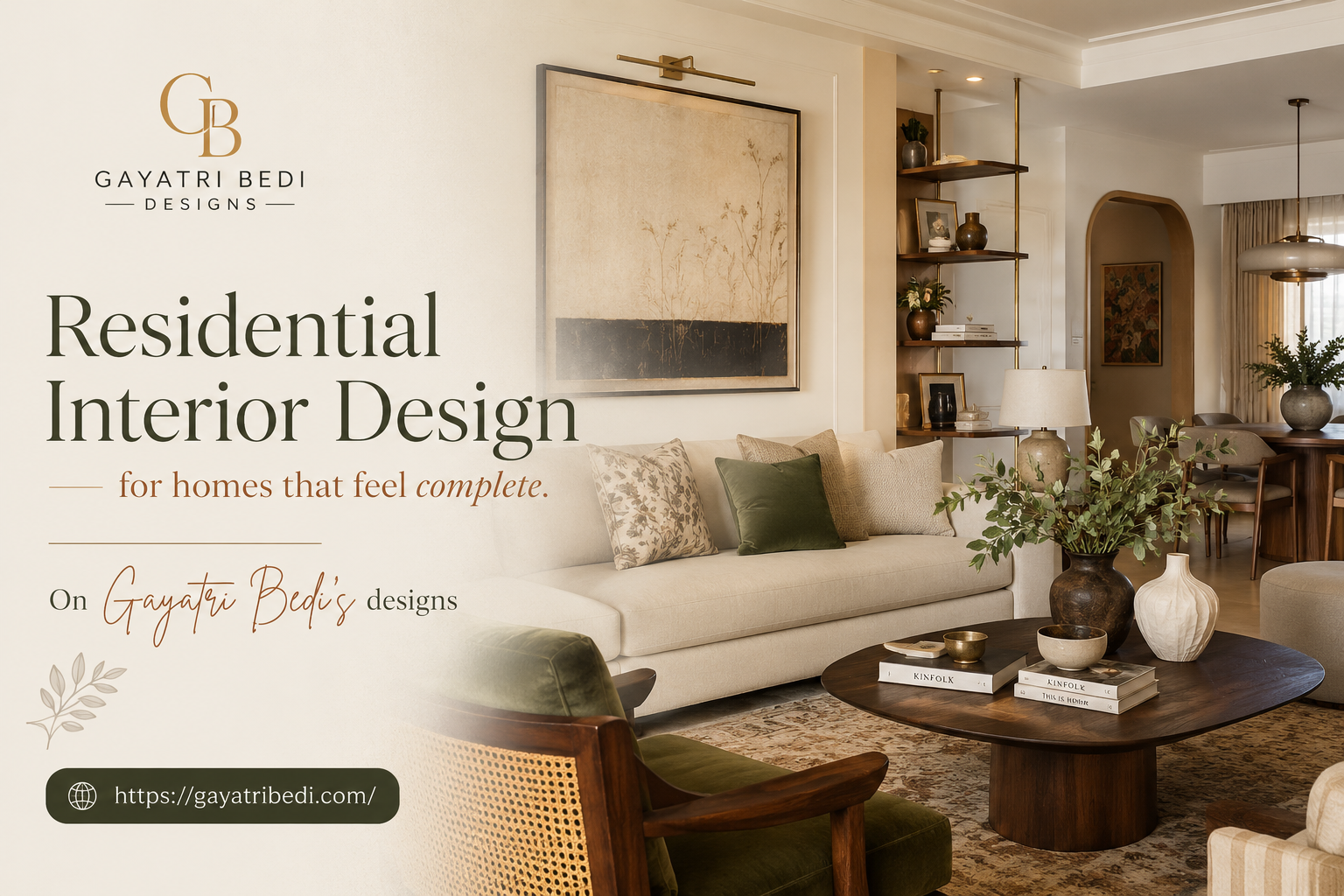
Introduction
Residential interior design is not just about making a home look beautiful, or you know… pretty enough for photos. It’s more like shaping how the place feels, how it works day to day, how it supports routines, and how it quietly reflects the people living there. A well-designed home doesn’t really rely on just one costly material, one “statement” wall, or a single trending colour story. It all comes together through proportion, comfort, lighting, the layout, furniture choices, textures, and those small details that seem connected, almost like they belong.
For homeowners, the most common misstep is often starting with visual references first before actually understanding the space itself. A Pinterest image can spark a mood, sure, but it can’t fix the real conditions of your home. Each room has its own dimensions, light direction, movement flow, storage needs, furniture fit, and lifestyle expectations. Interiors only feel right when those decisions are planned together, not in a random order.
At Gayatri Bedi Designs, the approach is rooted in creating homes that feel warm, refined, and personal, with pieces that are carefully chosen. The goal isn’t to shove one style into a room, but to understand the people, the architecture, and the rhythm of everyday living. That’s usually where a home starts feeling truly complete.
Why Interior Planning Matters Before Styling
A beautiful home starts way before the last décor stage, not really after or during. Before choosing cushions, curtains, art, or all the little accessories, the space needs a clearer plan, even if you think you already know what you want. That plan should cover furniture placement, movement paths, where electrical points go, lighting layers, storage needs, and the overall material direction.
Without planning, even costly interiors can end up feeling odd. Like, a sofa may look really luxurious, but then it blocks movement or makes walking routes feel tight. A chandelier can look grand and dramatic, but it might feel oversized for the ceiling height. And a wardrobe may give you great storage, yet it can disrupt the visual flow of a bedroom, like the room can’t breathe. These aren’t just styling problems. They’re planning problems.
Residential interior design works best when the process begins with how the space will actually be used. For example, a living room should not only look good for guests. It should also support everyday conversations, relaxed evenings, family time, and easy movement through the room. A bedroom should not only look premium; it should feel calm, restful, and practical. A dining area should not only have a beautiful table. It also needs comfortable seating, lighting that feels right, serving access that’s simple, and a visual connection to the rest of the home.
When planning comes first, styling becomes stronger, and it all makes sense.
Understanding the Homeowner’s Lifestyle
Every home has some kind of different personality, because every family lives in a slightly separate way. In some houses you really need those formal entertaining spaces; for others it’s more of a relaxed lounge. Then there’s the whole thing with child-friendly planning and how traffic moves, where snacks happen, and all that. Also quiet corners, reading spaces, work zones, or even those display areas that make the room feel more personal. Not just pretty, but usable.
That’s why understanding the client feels like one of the biggest stages in interior design. The designer should figure out how the family actually moves through the home, how often they invite guests, what kind of materials they favour, how much storage they really need, and what maintenance level they’re comfortable handling day by day. Like, what’s realistic, not what’s ideal on paper.
A home that’s built only for photographs can look impressive for a few days, maybe a week. But when it’s designed around lifestyle, it keeps feeling right for years, even as routines change.
At Gayatri Bedi Designs, the lifestyle-first approach helps craft interiors that are elegant but not cut off from daily life. The aim is to make the home feel thoughtfully curated, not staged.
Creating a Strong Layout
The layout is kind of the backbone of any home interior. It ends up deciding how people move, how the furniture sits, how rooms connect, and how each zone actually functions. A strong layout can make even a simple space feel premium, you know, like it’s more intentional. A weak layout can make even a big home feel chaotic, almost confusing.
In residential interior design, layout choices touch almost everything. Where the bed goes affects the side table placement, how the wardrobe opens and reaches, lighting points, and just the walking space. The sofa arrangement affects how conversation flows, how TV viewing feels, the centre table size, and the whole circulation. Even where the dining table sits affects the serving flow and the visual link with other areas.
A good layout should feel natural. You shouldn’t have to squeeze around furniture, or keep bumping into it, or struggle with storage, or notice that one area is overfilled while another feels kind of empty. The plan should support comfort without making the home feel crowded in a rushed way.
And this is where custom planning really does matter. Instead of buying furniture first and trying to adjust the room around it, the room should be planned first, and the furniture should be selected or even designed accordingly.
The Role of Lighting in a Beautiful Home
Lighting can totally change the vibe of a home. It decides whether a room feels kind of flat or warm, dramatic, calm, or actually luxurious, you know? A lot of homes still rely on ceiling lights only, and that usually makes the space feel a little harsh, unfinished, or just off.
A more refined approach is to do layered lighting, which is kind of more nuanced. You get ambient lighting for general brightness, task lighting for what you’re doing day to day, accent lighting to bring attention to details, and decorative lighting that adds visual personality.
For instance, in a bedroom you might have ceiling lighting, bedside lamps, lighting inside or around the wardrobe, and then a soft indirect glow behind the headboard too. In a living room, there could be a chandelier, wall lights, table lamps and concealed lighting hidden in niches. In a dining area, a pendant light over the table works well to pull focus and keep the moment centred.
Good lighting should not feel loud. It should quietly support the space and also build a bit of depth. In luxury homes, it’s often the lighting itself that makes materials, textures, and furniture look more opulent and, honestly, more alive.
Choosing the Right Materials
Materials bring texture, warmth, and identity to a home, sort of like they give it a quiet voice. Wood, marble, glass, metal, fabric, stone, wallpaper, and paint – they all create different moods and sensations. The real trick is not to stack every option, but to choose fewer and place them with the right kind of balance.
A more refined home usually keeps a controlled material palette. This does not mean the space needs to feel sterile or plain. It just means each material should have a clear intention, even if it’s subtle. Like, wood can add that cosy warmth; marble can bring a little elegance; metal can add definition or detail; and fabric can soften the whole visual language.
In residential interior design, choosing materials also needs to involve thinking about durability and how much maintenance they actually need. Something can look gorgeous in a showroom but still be a poor fit for a busy family life. So the designer has to weigh beauty alongside practicality, not just appearance alone.
For Gayatri Bedi Designs, we pick materials to highlight the home’s character, while still keeping the overall look cohesive. The end result is a space that feels polished, but it still feels lived-in and comfortable, in that good way.
Custom Furniture Makes a Difference
Furniture is not just about stuffing space, you know. It influences how a room works and even how it “ends” or feels when everything is done. Sometimes ready-made furniture can be okay for a few cases, but it often still doesn’t quite fit the dimensions or the little needs of a specific home.
Custom furniture, though, gives you a much better grip on proportions, storage capacity, finish details, and the overall joining with the interior design “language”. For example, a custom bed can be designed with the correct headboard height, side table placement, lighting location, and built-in storage, if needed. A custom TV unit can tuck away cables, open up a place for display, and match the exact wall size without awkward gaps. A custom wardrobe can be arranged based on how you actually wear clothes and also on the room dimensions that you really have.
The real advantage of custom furniture is control. You’re not bending your home to fit what’s already on the market; you’re making pieces that belong to the space.
This matters a lot in homes where every corner counts. The right furniture can make a room feel bigger, calmer, and more premium, sometimes in ways you don’t even notice at first.
Colour Palettes That Feel Elegant
Colour has a strong impact on how a home feels. Some colours make a space feel calm, some make it feel dramatic, and some can feel energetic. But really, a good colour palette is not just about picking one trending shade. It is more like creating a connected visual story across the whole home, kind of, all the way through.
Neutral tones are often used in elegant interiors because they give you a timeless base. Soft beige, warm white, taupe, ivory, grey, sage, and those muted earthy tones can make a space feel refined. Then accent colours show up naturally through furniture, art, cushions, rugs, or little décor pieces that bring personality.
The key is balance. If you add too many colours, it starts to feel visually busy. If you use too little colour, it can feel kind of flat. A well-designed palette creates interest without pushing too hard on the eye.
For homes that need a luxurious but warm feel, muted tones paired with rich textures often work better than loud colours.
Designing Bedrooms With Comfort and Character
A bedroom should feel like a retreat, kind of. It should help you rest, keep privacy, and support personal comfort too. A lot of people only focus on the bed wall, but honestly a bedroom needs more complete planning, not just that one spot.
The bed placement, wardrobe design, side tables, curtains, lighting, seating, rug, wall treatment and artwork all matter. The whole room should feel soft but not messy or cluttered. It should look elegant, yet it also has to work well every single day.
In residential interior design, bedrooms need a careful balance between aesthetics and comfort. The materials should feel soothing, quiet in a way. Lighting should be adjustable so you can change the mood. Storage should be practical, not just stylish. And the furniture should fit the space without making it feel cramped.
A well-designed bedroom doesn’t have to be overdone. Sometimes a calm palette, a beautiful headboard, warm lights, soft furnishings and small, thoughtful detailing are enough to create a premium experience.
Living Rooms That Feel Welcoming
The living room is often kind of the first big impression of a home. It is where guests are received, where conversations go on, and where families actually spend time together. This place should feel inviting, cosy, and somehow well put together. Not too stiff, you know.
A strong living room design starts with seating arrangements. The sofa, chairs, centre table, side tables, and rug should fall into place like a natural chat zone. The layout ought to leave room for walking around without messing up the seating rhythm or blocking the flow.
Then there is lighting, which really matters. A chandelier or a decorative light can act like a clear focus point, while lamps and wall lights add that extra warmth. You can also mix materials so it feels richer—wood, stone, metal, and fabrics work nicely. Together they make the space feel grounded and a bit more layered.
And the living room should show, in a quiet way, the homeowners’ taste. Art, books, sculptures, décor objects and personal keepsakes can give the room more meaning. It is like the space gets a small personality without even trying too hard.
Dining Spaces With Presence
A dining space is not just a table and chairs or, you know, like random stuff. It can become one of the more elegant parts of a home when it’s done well. The right table size, chair comfort, lighting, wall treatment and storage planning can make a noticeable difference.
A pendant or chandelier above the dining table gives that clear focus. A console or crockery unit can add useful functions. Wall art, mirrors, or panelling can lift the space without turning it too heavy visually.
The dining area should feel tied into the home’s overall design language. It should not feel like an isolated furniture arrangement, like it lives somewhere else. Whether the home is modern, classic, transitional, or eclectic, the dining space should carry the same visual mood.
Storage That Looks Seamless
Storage is one of the most important but still underrated parts of home interiors, you know. Without enough storage, even a home that’s beautifully designed can start looking messy fast. The best storage solutions feel practical but also kind of quietly disappear into the space, visually seamless, so to speak.
Wardrobes, consoles, kitchen units, vanity storage, shoe cabinets, utility storage, and even those hidden compartments should be planned early. That way you avoid those last-minute “extra” pieces, which often mess with the whole design plan.
In residential interior design, storage shouldn’t look like some afterthought. It should merge with the interiors, keep up with the material palette, and actually support the day-to-day rhythm of the family—not just sit there and look nice.
Good storage makes a home easier to keep up, maintain, and tidy. It also helps the visible areas stay clean, elegant, and clutter-free, like everything has its proper place.
Styling Adds the Final Layer
Styling is that last little layer where a home starts to feel like it is actually breathing, you know? It covers cushions, throws, rugs, curtains, art, accessories, plants, books, candles, trays and those decorative bits you only notice once they’re missing.
That said, styling shouldn’t feel random or kind of happen-by-accident. Every single piece is meant to push the mood of the room a little, but consistently. Like, a modern, elegant home might want clean accessories, sculptural pieces, and soft textures that make everything look calm. On the other hand a more eclectic vibe could lean into stacked art, gathered objects, and richer colours, almost like the space is telling stories over time.
Styling also helps the home feel personal, not just nicely arranged. It should not look like a showroom. Instead, it should show good taste, memories that belong there, and actual personality, not something copied from a catalogue.
At Gayatri Bedi Designs, styling is treated as a continuation of the design narrative. The final touches are picked carefully so the home feels finished, warm, and genuinely lived-in.
Why Personalisation Matters
No two homes should feel exactly the same. Even if two clients like the same look or style, their spaces, routines, and little preferences will probably diverge. This is where personalisation matters; it’s the thing that separates a designed home from something copied and pasted.
Personalisation can show up through custom furniture, curated artwork, family heirlooms, personal colour preferences, décor inspired by travel, or materials that really match the homeowner’s own taste. And yeah, it can also come from how a room is actually used in real life.
A formal living room for one family may turn into a relaxed entertainment lounge for another. A guest bedroom might also act as a work area, without anyone thinking twice. Even a balcony can become a quiet reading corner. Those kinds of decisions quietly shape the entire design.
Good interiors are not about forcing a designer’s taste onto someone else. It’s more about translating the homeowner’s way of living into a polished visual and functional experience, you know, that feels like them, not like a template.
Common Mistakes to Avoid
One common mistake is buying furniture before even planning the room, and yeah, it happens a lot. Usually it ends up with wrong sizes, awkward walking paths, and pieces that simply don’t match as well as you hoped.
Another mistake is copying trends without really looking at the home’s architecture. Not every trend fits every space. Something that looks perfect in a bigger villa might feel a bit wrong in a compact apartment.
A third thing people do is ignore lighting. Even if the materials are top-tier, under dim or bad lighting everything can look kind of flat, dull, or tired.
Another issue is using way too many statement elements. If every wall, lamp, furniture item, and small accessory tries to get attention at once, the whole home tends to lose that calm feeling.
Finally, many homeowners underestimate storage. A home needs enough hidden and visible storage, so daily life works smoothly and you’re not constantly moving things around.
If you avoid these mistakes, the whole design process usually feels more efficient, and the final result becomes more satisfying.
How Gayatri Bedi Designs Approaches Homes
Gayatri Bedi Designs takes on homes that feel elegant, detailed, and a bit personal too. But the work isn’t only about picking finishes or putting together attractive visuals. It’s more like really getting to know the client, looking closely at the space, mapping out the layout, choosing materials, designing the furniture, and then styling the final environment in a way that feels lived in.
The design language stays polished, but it doesn’t get cold. There is room for warmth, softness, and little bits of personality to show up naturally. So whether the room wants a modern mood, a classic touch, or a layered kind of luxury, the priority remains the same: to make interiors that feel whole and genuinely liveable.
With this approach, homeowners usually end up with something more than just “nice to look at”. They get a home that is comfortable, visually appealing, and aligned with how they actually live day to day.
Conclusion
A beautiful home is not made by random décor decisions or whatever looks good today. It gets shaped through planning, proportion, careful material control, lighting, furniture, and those small styling choices that all blend together in the end, even if it doesn’t look “forced”. Residential interior design gives a home a kind of structure, real comfort, a clear identity, and long-term worth.
For homeowners who want a space that feels refined and genuinely personal, the right design approach truly changes everything. Gayatri Bedi Designs brings together attentive planning and elegant, precise detailing to form homes that feel finished, welcoming, and pleasantly lived-in.
FAQ
1. What does residential interior design include?
Residential interior design includes space planning, furniture layout, material selection, lighting design, colour palette, custom furniture, décor, styling, and overall coordination of the home’s interior experience.
2. Why should I hire a designer for my home?
A designer helps you avoid planning mistakes, choose the right materials, create a cohesive look, improve functionality, and make better use of your available space.
3. How do I make my home look more elegant?
Start with a clear layout, layered lighting, a controlled colour palette, good-quality materials, custom furniture, and thoughtful styling. Elegance comes from balance, not excess.
4. Is custom furniture better than ready-made furniture?
Custom furniture is better when you need precise sizing, specific storage, matching finishes, and a more integrated look. Ready-made furniture can work when the size and style fit the space correctly.
5. How important is lighting in home interiors?
Lighting is extremely important. It affects mood, comfort, material appearance, and the overall premium feel of the home. Layered lighting usually creates a better result than relying on one ceiling light.