
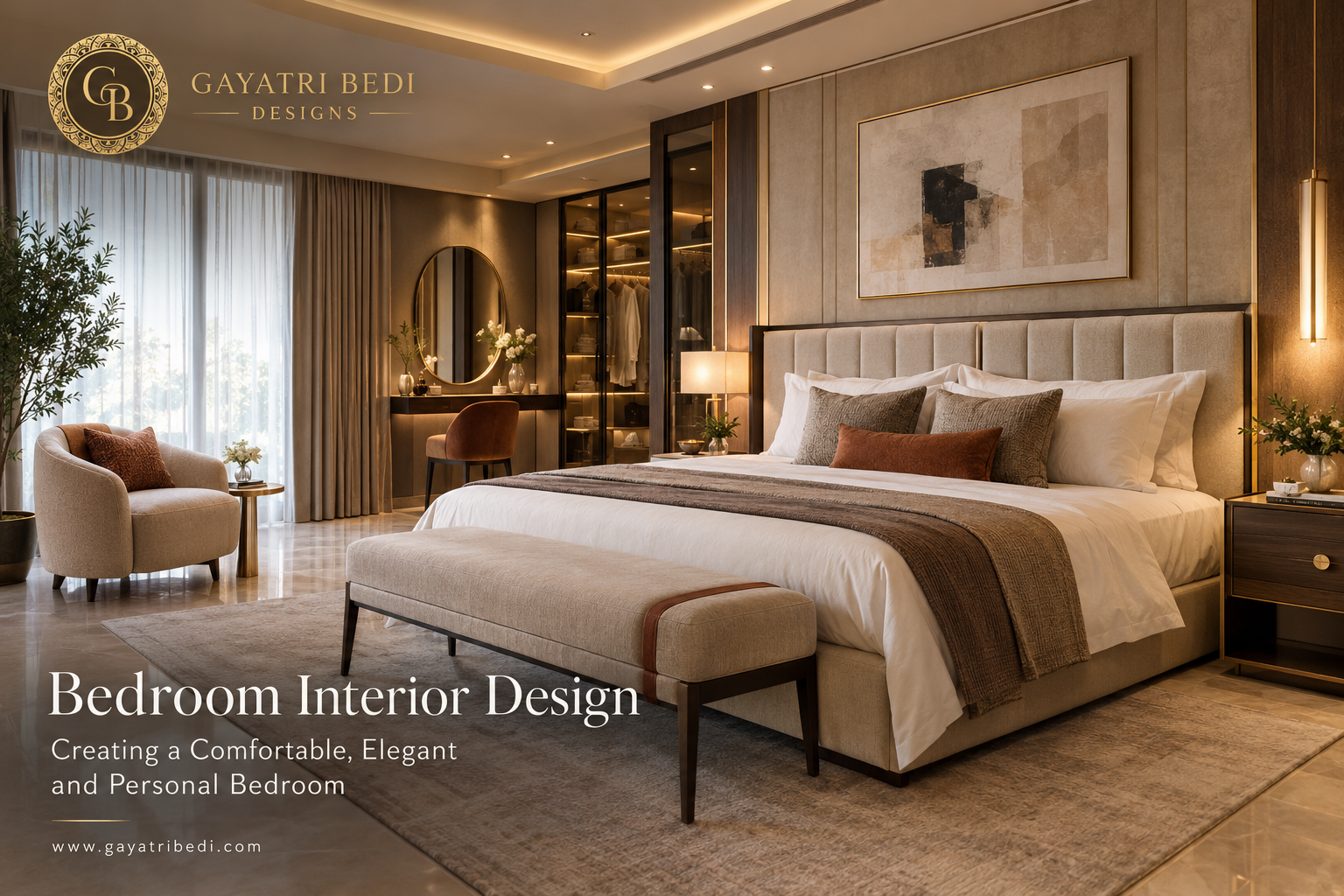
A bedroom is one of the most personal spaces in a home. It is where the day begins, where we unwind after a busy schedule, and where comfort matters as much as visual beauty. This is why bedroom interior design should never be limited to selecting attractive furniture, colours, or decorative accessories. A successful bedroom is a carefully considered combination of planning, comfort, functionality, materials, lighting, storage, and personal expression.
A thoughtfully designed bedroom can completely change the way a home feels. The right furniture proportions can make movement easier, carefully selected lighting can create a relaxing atmosphere, and well-planned storage can keep the room organised. At the same time, textures, artwork, colours, fabrics, and bespoke furniture can give the bedroom a distinctive identity.
At Gayatri Bedi Designs, interior design is approached through the relationship between aesthetics and everyday living. Rather than creating spaces around a fixed style, the design process can respond to the client’s lifestyle, preferences, architecture, and functional requirements. This personalised approach becomes particularly important in a bedroom because the room should feel connected to the person who uses it.
What Makes Bedroom Interior Design Important?
The bedroom is different from many other areas of the home because it is primarily a private space. Living rooms and dining rooms are often designed for interaction and entertaining, while a bedroom needs to provide a sense of comfort, privacy, calm, and individuality.
Good bedroom interior design considers how the room will actually be used. The position of the bed, accessibility of wardrobes, amount of storage, location of electrical points, lighting levels, window treatments, seating requirements, and overall circulation can all influence the experience of the room.
A visually impressive bedroom may still feel uncomfortable if these practical details are ignored. On the other hand, a well-planned room can feel sophisticated even when its design is relatively simple.
The objective is therefore not to fill the room with expensive elements. It is to make every important element work together.
Start With the Bedroom Layout
The layout should be one of the first considerations when planning a bedroom.
Before selecting furniture, it is important to understand the dimensions and architectural characteristics of the space. Windows, doors, columns, niches, ceiling height, natural light, views, and existing structural elements can all influence furniture placement.
The bed generally becomes the main visual anchor of the room. Its position should allow comfortable movement around it while maintaining a strong relationship with the rest of the space. Bedside tables, wardrobes, dressing units, chairs, benches, and other furniture should then be arranged around this central element.
In a larger bedroom, the layout can be divided into different functional zones. A sleeping area can be complemented by a reading corner, dressing space, seating area, or compact work zone. These areas do not necessarily need physical partitions. Furniture placement, rugs, lighting, and material changes can subtly define each zone.
For smaller bedrooms, efficient planning becomes even more important. Furniture should be appropriately scaled, and storage should be integrated wherever possible.
The Bed as the Centre of the Design
The bed is usually the most important furniture element in any bedroom.
Its size, shape, material, headboard, bedding, and relationship with the surrounding walls influence the character of the entire room. A substantial upholstered headboard can introduce softness and luxury, while a timber headboard can create a warmer and more natural atmosphere.
The headboard can also become an architectural feature. Full-height panels, fluted timber, upholstered surfaces, textured finishes, stone, wallpaper, or integrated bedside units can transform an otherwise simple wall.
However, statement design should always be balanced with comfort.
A headboard may look impressive, but it should also feel appropriate to the room’s scale. Similarly, bedside tables should provide enough usable space without making the sleeping area feel crowded.
The best bedroom interiors create visual impact without sacrificing everyday usability.
Creating Functional and Elegant Storage
Storage is an essential part of bedroom interior design because clutter can quickly affect the atmosphere of the room.
Clothing, shoes, accessories, bags, bedding, luggage, books, electronics, and personal belongings all require space. If storage is insufficient, these items can remain visible and make the bedroom feel disorganised.
Built-in wardrobes are often an effective solution because they can be designed according to the exact dimensions of the room. Floor-to-ceiling cabinetry can maximise vertical space, while customised internal compartments can make everyday organisation easier.
Wardrobes can also be designed to visually blend into the architecture. Matching the cabinetry with wall colours or using subtle finishes can create a cleaner and more sophisticated appearance.
For compact bedrooms, sliding wardrobe systems, under-bed storage, multifunctional furniture, and wall-mounted elements can help make better use of limited space.
Good storage is not simply about creating more cupboards. It is about understanding what the occupants actually own and designing the space around their lifestyle.
Choosing the Right Colour Palette
Colour has an important role in creating the atmosphere of a bedroom.
Soft neutral shades such as warm white, beige, cream, taupe, muted grey, and earthy tones can create a calm and timeless foundation. These colours can then be layered with contrasting furniture, textiles, artwork, or accessories.
A neutral bedroom does not have to feel plain. Texture can provide depth without requiring strong colours. Linen, wood, stone, upholstery, wallpaper, rugs, and curtains can all contribute to visual richness.
For homeowners who prefer more expressive interiors, deeper shades can also be incorporated thoughtfully. Green, blue, terracotta, charcoal, burgundy, or muted jewel tones can be introduced through upholstery, artwork, an accent wall, or decorative elements.
The important consideration is balance. A bedroom should feel visually interesting without becoming overwhelming.
Lighting Can Transform the Bedroom
Lighting is one of the most important elements of bedroom interior design.
A single ceiling light rarely provides enough flexibility for a well-designed bedroom. Instead, different layers of lighting can be combined to support different activities and moods.
Ambient lighting provides general illumination. Task lighting can support reading, dressing, working, or applying makeup. Accent lighting can highlight architectural details, artwork, niches, wall textures, or furniture.
Bedside wall lights can reduce the need for bulky table lamps, while concealed LED lighting can create a softer evening atmosphere. Wardrobe lighting can make storage easier to use, particularly in deeper cabinets.
Lighting controls should also be positioned conveniently. Ideally, the occupants should be able to control important lights without having to move around the room unnecessarily.
The colour temperature of the light is equally important. Warmer illumination can create a more relaxed atmosphere in the evening, while brighter lighting may be useful for functional areas such as dressing spaces.
Materials and Textures Add Character
Materials are what give a bedroom its physical and visual character.
Wood can introduce warmth and natural variation. Stone can create a refined appearance. Upholstery adds softness, while metal can introduce subtle contrast. Glass can make certain furniture elements feel lighter, while textured wall treatments can add depth.
The key is not to use as many materials as possible. Instead, the materials should have a clear relationship with one another.
For example, a bedroom could combine warm timber furniture with a fabric headboard, soft curtains, a textured wall, and natural flooring. The result can feel layered without becoming visually complicated.
Textures are particularly useful when working with neutral colours. Instead of relying on dramatic colour contrasts, designers can create interest through differences in surface, pattern, softness, and finish.
Furniture Should Reflect the Lifestyle
Furniture selection should always begin with the people who will use the room.
Someone who enjoys reading may require a comfortable chair and dedicated reading light. Someone who frequently works from the bedroom may need a compact desk. A homeowner with an extensive wardrobe may require a detailed dressing area and customised storage.
A bench at the foot of the bed can provide additional seating. A console can create a surface for decorative objects. A carefully designed bedside table can provide storage while maintaining visual balance.
Bespoke furniture can be particularly useful because it allows the dimensions, materials, proportions, and functions to be customised according to the room.
This is where furniture becomes more than an object. It becomes part of the architecture and design language of the bedroom.
Window Treatments for Comfort and Privacy
Windows contribute natural light and ventilation, but they also require careful consideration in a bedroom.
Curtains and blinds can control privacy, glare, temperature, and the amount of daylight entering the space. Layered curtains are particularly useful because sheer fabric can filter daylight, while blackout curtains can provide greater darkness when required.
Floor-to-ceiling curtains can also enhance the perceived height of the room. Selecting a fabric that complements the overall colour and material palette can help integrate the window into the larger design.
Window treatments should therefore be considered during the planning stage rather than added as an afterthought.
Flooring and Rugs
Flooring provides the foundation for the bedroom.
Timber flooring can introduce warmth and continuity, while stone and tiles can provide a cleaner contemporary appearance. Rugs can then add softness and help visually define the sleeping area.
A rug positioned beneath the bed can make the furniture arrangement feel more connected. In a larger room, separate rugs can also help distinguish the sleeping area from a seating or dressing zone.
The tactile experience of flooring is especially important in a bedroom because it is one of the first surfaces experienced when getting out of bed in the morning.
Art and Decorative Elements
A bedroom should not feel like a showroom.
Personal objects, artwork, photographs, books, sculptures, decorative pieces, and meaningful belongings can give the room a sense of identity.
Artwork above the bed can create a strong focal point, while smaller pieces can be placed on bedside tables or dressing areas. Decorative objects should be selected carefully so that they contribute to the overall composition instead of creating unnecessary visual clutter.
The most personal bedrooms are often not the ones with the greatest number of decorative objects. They are the ones where selected objects have meaning.
Bedroom Interior Design for Different Types of Spaces
Every bedroom requires a slightly different design response.
Master Bedroom Interior Design
A master bedroom can become a complete private retreat. Depending on the available space, it may include a sleeping zone, dressing area, seating corner, study area, and additional storage.
The design can focus on creating a cohesive experience through coordinated furniture, lighting, materials, textiles, and decorative elements.
Guest Bedroom Interior Design
A guest bedroom should prioritise comfort and simplicity.
A comfortable bed, accessible lighting, practical storage, charging points, curtains, and sufficient surface space can make visitors feel welcome. The design should remain elegant without becoming overly personalised.
Children’s Bedroom Interior Design
Children’s bedrooms need to accommodate changing needs.
Storage, study areas, play zones, durable materials, and flexible furniture can make the room more practical over time. As the child grows, some furniture and decorative elements can be updated without redesigning the entire room.
Small Bedroom Interior Design
Small bedrooms benefit from careful space planning.
Integrated wardrobes, multifunctional furniture, wall-mounted lighting, lighter visual elements, and uncluttered surfaces can help the room feel more open.
The goal is not simply to make the room appear larger. It is to make the available space work more efficiently.
How to Create a Luxury Bedroom Without Overdesigning
Luxury does not necessarily mean using more expensive materials or filling the room with decorative elements.
A sophisticated bedroom can emerge from excellent proportions, quality craftsmanship, carefully selected materials, personalised furniture, and precise detailing.
A restrained material palette can often feel more luxurious than a room containing too many competing finishes. Similarly, one beautifully designed custom furniture piece may have greater impact than several unrelated decorative objects.
Luxury is often found in the details: the way a wardrobe aligns with the wall, the quality of a fabric, the softness of the lighting, the proportion of a headboard, or the way materials transition from one surface to another.
Common Bedroom Interior Design Mistakes
One common mistake is choosing furniture before considering the complete layout. This can result in oversized pieces and uncomfortable circulation.
Another mistake is relying on a single source of lighting. Bedrooms need different levels of illumination for different activities.
Insufficient storage is another frequent issue. Even a beautifully designed room can quickly appear cluttered if everyday belongings do not have designated places.
Ignoring electrical planning can also create practical problems. Bedside charging points, switches, television connections, dressing-area lighting, and other requirements should be considered early in the design process.
Finally, following trends too closely can make a bedroom feel less personal. Trends can provide inspiration, but the design should ultimately respond to the people living in the space.
A Personal Approach to Bedroom Interior Design
The most successful bedrooms are usually those that reflect the people who use them.
Instead of starting with a particular trend, the design process can begin with questions about lifestyle. How does the occupant start the morning? Do they read before sleeping? Do they work from the room? How much storage is needed? What colours make them feel comfortable? Do they prefer a minimal environment or a layered interior?
The answers to these questions can influence everything from furniture selection to lighting and materials.
This approach allows the bedroom to become more than a visually attractive space. It becomes an environment designed around real life.
Why Bespoke Furniture Works Well in Bedrooms
Bespoke furniture can provide greater flexibility than standard furniture because it can be developed specifically for the room.
A custom bed can be designed according to the proportions of the space. A headboard can incorporate bedside tables, storage, lighting, or electrical points. Wardrobes can be customised according to clothing requirements. A dressing table can be designed around the user’s height, storage needs, and preferred materials.
For interiors where every centimetre matters, bespoke furniture can create a more seamless relationship between architecture and furniture.
It can also help establish a distinctive design identity.
The Gayatri Bedi Designs Approach
Gayatri Bedi Designs approaches interiors through a combination of design, furniture, materials, detailing, and personalisation. Existing work from the studio describes its bedroom design process as moving from layout and furniture to materials, lighting, textiles, and personal details.
This approach is particularly relevant to bedrooms because the room needs to balance visual appeal with everyday comfort.
A well-designed bedroom should not feel as though every element was selected independently. The bed, wardrobe, lighting, flooring, curtains, artwork, furniture, and accessories should form one coherent composition.
The result should feel intentional but not overly designed.
Conclusion
Bedroom Interior Design is ultimately about creating a space where beauty and everyday life can exist together.
The layout determines how the room functions. Furniture establishes comfort and scale. Storage maintains order. Lighting creates atmosphere. Materials and textures add depth. Curtains and flooring provide softness and privacy. Artwork and personal objects give the room individuality.
When these elements are planned together, the bedroom becomes much more than a sleeping area. It becomes a private retreat that reflects the lifestyle, personality, and preferences of its occupants.
For homeowners looking to create a refined and personalised bedroom, thoughtful planning is more valuable than simply following the latest trend. A well-designed bedroom should remain comfortable, functional, and visually relevant for years to come.
Gayatri Bedi Designs brings together interior design, bespoke furniture, materials, decoration, and detailed styling to create spaces where individual character and thoughtful design can work together.
Frequently Asked Questions About Bedroom Interior Design
What is the most important element of bedroom interior design?
The layout is one of the most important starting points because it determines furniture placement, circulation, storage, lighting, and the overall functionality of the room.
How can I make a small bedroom feel more spacious?
Use appropriately scaled furniture, integrated storage, lighter visual elements, layered lighting, and uncluttered surfaces. Built-in wardrobes and multifunctional furniture can also make better use of limited space.
What colours are suitable for a bedroom?
Warm neutrals, earthy shades, soft whites, muted greens, blues, and subtle greys can create a calm atmosphere. The ideal palette depends on the room’s natural light, materials, architecture, and personal preferences.
How important is lighting in a bedroom?
Lighting is extremely important because a bedroom needs to support different activities and moods. Combining ambient, task, and accent lighting provides greater flexibility than relying on one central fixture.
Is bespoke furniture useful for bedroom interiors?
Yes. Bespoke furniture can be designed around the room’s dimensions, storage requirements, lifestyle, materials, and aesthetic direction. It can also create a more seamless relationship between furniture and architecture.
How can a bedroom look luxurious without being excessive?
Focus on proportion, craftsmanship, quality materials, layered textures, thoughtful lighting, and personalised details. A restrained and cohesive design can often create a stronger sense of luxury than excessive decoration.
