
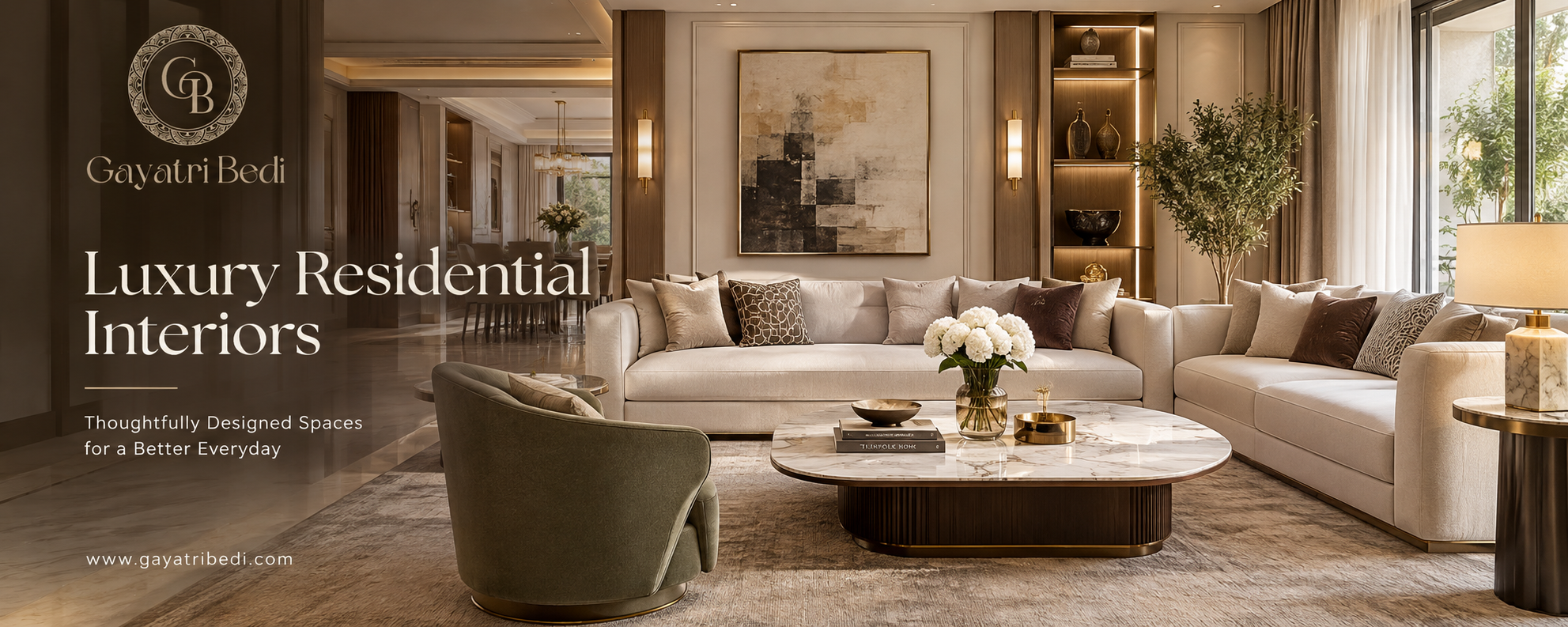
A luxurious home is not simply a space filled with expensive furniture, decorative accessories, or premium materials. It is a thoughtfully designed environment where beauty, comfort, functionality, and personal expression come together. The most successful luxury residential interiors reflect the people who live in them, creating spaces that feel sophisticated while remaining welcoming and practical for everyday life.
Modern homeowners increasingly seek interiors that go beyond visual appeal. They want homes that express their personalities, support their routines, and maintain their elegance over time. From carefully planned living rooms and serene bedrooms to statement foyers and customised furniture, every element contributes to the overall experience of a residence.
At Gayatri Bedi Designs, the design process focuses on creating distinctive interiors through thoughtful planning, material selection, bespoke furniture, and carefully considered details. The objective is to develop spaces that feel cohesive rather than predictable, combining refined aesthetics with the practical needs of modern living.
Whether designing a contemporary apartment, a spacious villa, or a private residence, luxury interior design begins with understanding the people who will experience the space every day.
Understanding the Meaning of Luxury Residential Interiors
The concept of luxury in residential design has evolved considerably. While traditional luxury often emphasised grandeur, elaborate decoration, and expensive finishes, contemporary interiors increasingly prioritise individuality, comfort, craftsmanship, and intelligent space planning.
Luxury residential interiors are defined by how effectively every element works together. A beautifully designed room should have the right proportions, comfortable furniture, balanced lighting, suitable materials, and a clear visual identity. These qualities create an environment that feels complete without becoming unnecessarily complicated.
For example, a living room does not need excessive decoration to feel luxurious. A carefully selected sofa, a sculptural coffee table, elegant wall finishes, layered lighting, and a thoughtfully positioned artwork can establish a strong visual identity. Similarly, a bedroom can feel sophisticated through soft textures, well-designed storage, comfortable bedding, and a calming colour palette.
The difference lies in the intention behind every decision.
A well-designed residence also considers how people move between rooms, where they spend most of their time, how much storage they require, and how the home accommodates both private moments and social gatherings. When these considerations are addressed early, the final interior feels natural and effortless.
Why Personalisation Is Essential in Luxury Home Design
Every homeowner has a different understanding of comfort and luxury. Some prefer understated contemporary interiors, while others appreciate classic detailing, rich materials, and expressive furniture. Some families enjoy entertaining guests, whereas others prioritise quiet spaces for relaxation, reading, or working from home.
A successful interior design approach recognises these differences rather than applying the same visual style to every residence.
Personalisation begins with understanding the homeowner’s lifestyle, preferences, daily routines, and long-term requirements. These conversations help establish the foundation for decisions involving layouts, materials, furniture, lighting, colours, and decorative elements.
For instance, a family that frequently hosts gatherings may benefit from an expansive living area, flexible seating arrangements, and a dining space that connects naturally with the surrounding rooms. A homeowner who values privacy may prefer a more intimate lounge, carefully planned bedroom suites, and dedicated spaces for personal interests.
The same principle applies to furniture. A custom-designed dining table can be developed around the number of people who regularly use it, the available floor space, and the architectural character of the room. A bespoke console can fit a foyer precisely, while a tailored wardrobe can maximise storage without making the bedroom feel crowded.
This personalised approach is central to the philosophy of gayatri bedi design, where the objective is to create interiors that feel connected to individual lifestyles rather than copied from existing trends.
Creating a Cohesive Design Language Throughout the Home
One of the most important characteristics of sophisticated residential interiors is visual continuity. Every room should have its own identity, but the residence should still feel like one complete design experience.
Without a clear design direction, individual rooms may look attractive in isolation yet feel disconnected when experienced together. Different flooring materials, competing colour palettes, unrelated furniture styles, and inconsistent finishes can interrupt the flow of the home.
Creating cohesion does not mean repeating identical furniture or colours in every room. Instead, it involves identifying a common design language that connects the various spaces.
This connection can be established through related material palettes, recurring metal finishes, complementary wood tones, consistent detailing, and carefully coordinated lighting. A warm neutral palette in the living room might continue into the dining area, while a similar timber finish connects cabinetry and furniture throughout the residence.
Bedrooms may introduce softer colours and more intimate textures without losing their relationship with the overall interior scheme.
At Gayatri Bedi Designs, this broader perspective helps ensure that individual design decisions contribute to the character of the complete residence. The result is a home that feels thoughtfully composed rather than assembled from unrelated elements.
Luxury Living Rooms That Balance Comfort and Sophistication
The living room frequently serves as the social centre of a residence. It is where families relax, guests gather, conversations develop, and the personality of the home becomes immediately visible.
Designing a luxurious living room requires more than selecting an impressive sofa or an attractive feature wall. The layout must accommodate movement, support comfortable seating, and establish a natural relationship between the furniture, lighting, artwork, and surrounding architecture.
Furniture proportions are particularly important. An oversized sofa may overwhelm a smaller room, while undersized seating can make a spacious living area feel unfinished. The arrangement should encourage conversation while maintaining sufficient circulation space around tables, chairs, and entrances.
Material selection further influences the atmosphere. Natural stone, warm timber, textured upholstery, glass, and carefully finished metals can introduce depth without making the room visually heavy. Rather than combining every available finish, a restrained palette often creates a more sophisticated result.
Lighting should also be planned in layers. General illumination provides overall visibility, accent lighting highlights architectural details or artwork, and softer lamps create a relaxed atmosphere during the evening.
Accessories complete the composition when selected thoughtfully. A statement artwork, a textured rug, sculptural objects, or carefully chosen cushions can introduce personality without overcrowding the room.
The strongest living rooms feel inviting throughout the day, not merely impressive when viewed in photographs.
Designing Bedrooms for Comfort and Relaxation
A luxury bedroom should offer a sense of calm, privacy, and personal comfort. Unlike formal entertaining areas, which may accommodate visual drama, bedrooms generally benefit from a more controlled atmosphere.
The design process begins with understanding the available space and establishing an effective layout. Bed placement, bedside tables, wardrobes, dressing areas, and circulation routes should be coordinated before decorative details are finalised.
The bed usually becomes the visual centre of the room. An upholstered headboard, carefully designed wall panelling, or a restrained feature finish can establish a focal point without overwhelming the interior. Bedside lighting should support practical activities such as reading while contributing to a relaxed ambience.
Colour and texture are equally significant. Soft neutrals, muted earthy shades, warm timber, layered fabrics, and tactile upholstery can make a bedroom feel inviting. Stronger colours can also work when used intentionally and balanced with the surrounding finishes.
Storage deserves the same attention as appearance. Well-planned wardrobes, dressing units, concealed compartments, and organised bedside storage help reduce visual clutter. When everyday belongings have appropriate places, the room becomes easier to maintain and more restful to experience.
A beautifully designed bedroom is therefore not defined by decoration alone. Its luxury comes from the relationship between comfort, organisation, materials, lighting, and personal taste.
Bespoke Furniture as a Defining Element of Luxury Interiors
Furniture plays a fundamental role in shaping the character of a residence. It influences how a room functions, how people interact with the space, and how the overall design is perceived.
In luxury residential interiors, bespoke furniture offers the opportunity to create pieces that respond directly to the architecture and the homeowner’s requirements. Instead of adjusting a room around standard furniture dimensions, customised pieces can be developed to suit the proportions, materials, and intended use of the space.
A bespoke sofa, for example, can be designed with the appropriate seating depth, upholstery, profile, and dimensions for a particular living room. A dining table can become a sculptural focal point, while a custom bed or wardrobe can integrate practical storage with refined detailing.
Material choices also contribute to the individuality of each piece. Wood, stone, metal, glass, leather, and upholstery can be combined according to the design direction and functional requirements.
However, customisation should serve a clear purpose. A piece does not become luxurious simply because it is unusual. Its proportions, craftsmanship, comfort, durability, and relationship with the surrounding interior determine its lasting value.
Gayatri Bedi Designs brings interior design and bespoke furniture into the same creative conversation, allowing furniture to become an integral part of the home’s identity rather than an afterthought.
Choosing Materials That Create Lasting Elegance
Materials have a significant influence on how an interior looks and feels. Their colour, texture, finish, and natural variations create the visual depth that distinguishes a carefully designed home.
Natural stone can introduce elegance and character, timber can bring warmth, metal can provide definition, and fabrics can soften architectural surfaces. Glass may help maintain a sense of openness, while textured wall finishes can create subtle visual interest.
The challenge is to combine these materials in a balanced way.
Too many competing finishes can make a room appear busy, while an overly uniform palette may feel flat. A considered combination of complementary materials creates contrast without disrupting the overall design.
Durability and maintenance should also influence material selection. A surface that looks beautiful in a showroom may not be suitable for a frequently used family area. Similarly, delicate upholstery may require more maintenance than a household can comfortably manage.
Natural light, ventilation, humidity, usage patterns, and cleaning requirements all affect how materials perform in a particular setting.
For long-term value, homeowners should consider not only the initial appearance of a finish but also how it will age and function over the years. High-quality materials, appropriate installation, and well-executed detailing help maintain the character of the interior.
The aim is to create a home that feels refined today while remaining practical and attractive in the future.
The Importance of Lighting in Luxury Residential Interiors
Lighting can transform the atmosphere of a home more dramatically than many decorative changes. It influences the appearance of colours, the texture of materials, the perception of space, and the mood of individual rooms.
An effective lighting plan combines different sources rather than relying on a single ceiling fixture. Ambient lighting provides general illumination, task lighting supports activities such as cooking or reading, and accent lighting draws attention to artwork, architectural features, or carefully selected objects.
In living rooms, a combination of ceiling lights, floor lamps, wall lights, and accent fixtures can create flexibility throughout the day. Dining areas may benefit from a well-positioned pendant or chandelier that establishes a focal point without obstructing views or creating glare.
Bedrooms require particular attention to comfort. Bedside lights, indirect illumination, and appropriately positioned dressing lights support different activities while preserving a relaxing atmosphere.
Natural light is equally valuable. Window placement, curtains, reflective surfaces, and furniture positioning influence how daylight moves through the residence. A thoughtful design can make a room feel more open and allow its materials and colours to appear more natural.
Lighting should therefore be planned alongside the layout, furniture, and material palette. When considered early, it becomes part of the architecture of the interior rather than a finishing decision made at the last moment.
Foyers and Dining Spaces That Make a Lasting Impression
The entrance establishes the first impression of a residence. A well-designed foyer introduces the character of the home while providing practical space for movement, storage, and everyday arrival.
Depending on the available area, the foyer may include a console, mirror, artwork, decorative lighting, or a carefully selected material feature. In a larger residence, a sculptural furniture piece or distinctive flooring pattern may create a strong visual statement. In a smaller entrance, simplicity and good proportions can achieve an equally elegant result.
The design should remain practical. Furniture must not obstruct circulation, and storage should accommodate everyday essentials without making the entrance feel crowded.
Dining areas require a similarly thoughtful balance. The table should fit comfortably within the room, with enough space for chairs to move and people to walk around them. Lighting should complement the table’s proportions, while the surrounding materials and furniture should relate to the wider interior scheme.
A statement dining table, upholstered chairs, refined wall finishes, or carefully selected artwork can create an elegant setting without excessive decoration.
Both spaces demonstrate how thoughtful planning and considered detailing can create memorable interiors through relatively focused design decisions.
Integrating Art and Decorative Details
Art and accessories give a residence its individuality. They introduce colour, texture, cultural references, personal memories, and visual interest that cannot always be achieved through architectural finishes alone.
In luxury residential interiors, decorative elements are most effective when they are selected in relation to the space. Artwork should be positioned at an appropriate height and given enough visual breathing room. Sculptural objects can add character to consoles and side tables, while rugs and textiles can help define seating areas and introduce warmth.
Personal collections, meaningful objects, and selected pieces of art can make a home feel authentic. These elements are particularly valuable because they connect the interior with the experiences and interests of its occupants.
However, decoration benefits from restraint. Filling every surface with accessories can weaken the impact of individual pieces and create unnecessary visual noise.
A carefully curated interior allows certain elements to stand out while leaving other areas quiet. This balance makes the home feel layered, personal, and comfortable rather than overly staged.
Modern Technology and Practical Luxury
Contemporary luxury also involves making everyday activities easier. Technology can support convenience, comfort, security, and energy management when it is integrated thoughtfully into the design.
Depending on the homeowner’s requirements, a residence may include smart lighting controls, automated curtains, climate management, integrated entertainment systems, or carefully planned security features.
The most successful installations are intuitive and appropriate to the way the household lives. Technology should solve practical problems rather than add complexity.
Electrical points, network requirements, control panels, speakers, and equipment storage should be coordinated with the interior design during the planning stage. This helps minimise visible cables and avoids unnecessary changes after furniture and finishes have been installed.
Practical luxury also includes efficient storage, comfortable circulation, durable surfaces, and flexible spaces that can adapt as family needs change.
When these details are planned alongside the aesthetic elements, the home becomes easier to use and maintain. The result is an environment where modern convenience supports the overall design instead of competing with it.
How Gayatri Bedi Designs Approaches Residential Design
Creating a distinctive home requires coordination between creative vision and practical execution. Gayatri Bedi Designs approaches residential interiors with an emphasis on individuality, thoughtful detailing, furniture, and the relationship between different elements of a space.
The process begins with understanding the property and the people who will live in it. Lifestyle requirements, preferred aesthetics, functional priorities, and the available space help establish the design direction.
Spatial planning then provides a framework for furniture placement, circulation, storage, and the relationship between rooms. Material palettes, colour combinations, lighting concepts, and furniture selections are developed in relation to this framework.
Bespoke furniture can be incorporated where standard pieces do not meet the requirements of the space or where a distinctive design element would strengthen the overall composition.
The final stages involve coordinating the smaller details that bring an interior together. These may include artwork, upholstery, decorative accessories, lighting adjustments, and the finishing touches that help each room feel complete.
For homeowners exploring gayatri bedi design, the emphasis is on a considered approach in which visual refinement and everyday usability remain connected. Rather than relying on a single trend or decorative feature, the goal is to create an interior with a clear identity and a lasting relationship with its occupants.
Conclusion: Creating a Home That Feels Personal and Timeless
Luxury residential interiors are ultimately about creating a better living experience. Premium materials and beautiful furniture can contribute to the result, but their value becomes meaningful when they are supported by thoughtful planning, comfortable layouts, appropriate lighting, and a clear understanding of the homeowner’s needs.
Every room has a role to play. Living areas should encourage interaction, bedrooms should support relaxation, dining spaces should feel welcoming, and entrances should establish the home’s character. When these individual spaces are connected through a consistent design language, the entire residence feels more complete.
Gayatri Bedi Designs brings together personalised interior design, bespoke furniture, material selection, and considered detailing to develop residential spaces that balance sophistication with functionality.
A truly luxurious home does not need to follow every trend or rely on excessive decoration. It should reflect the people who live there, accommodate their changing needs, and continue to feel comfortable and relevant over time.
That is the lasting value of well-planned luxury residential interiors: a home that looks beautiful, works naturally, and feels distinctly your own.
Frequently Asked Questions
What are luxury residential interiors?
Luxury residential interiors are personalised living spaces designed with attention to layout, material quality, furniture, lighting, craftsmanship, and comfort. They combine refined aesthetics with practical features that support the homeowner’s lifestyle.
What makes a home interior look luxurious?
A luxurious interior depends on balanced proportions, cohesive materials, suitable lighting, quality finishes, comfortable furniture, and thoughtful detailing. Expensive products alone cannot create a successful design without careful planning.
Why is bespoke furniture important in luxury interiors?
Bespoke furniture allows pieces to be designed around a home’s dimensions, functional requirements, material palette, and visual identity. It can improve space utilisation while introducing distinctive craftsmanship and personal character.
How can I make my home feel luxurious without excessive decoration?
Begin with an effective layout, a coordinated colour palette, suitable lighting, and a few well-chosen furniture pieces. Quality materials, organised storage, carefully positioned artwork, and uncluttered surfaces can create a refined atmosphere without unnecessary ornamentation.
How do I plan luxury residential interiors for a modern home?
Start by identifying your lifestyle requirements, preferred design direction, storage needs, and budget. Develop the layout before finalising furniture, finishes, and lighting, and coordinate the different elements to ensure that the residence feels cohesive.
How can Gayatri Bedi Designs help with residential interiors?
Gayatri Bedi Designs focuses on residential interior design, bespoke furniture, material selection, and styling. Homeowners can explore the studio’s work and contact the team through the official website to discuss their project requirements.
