
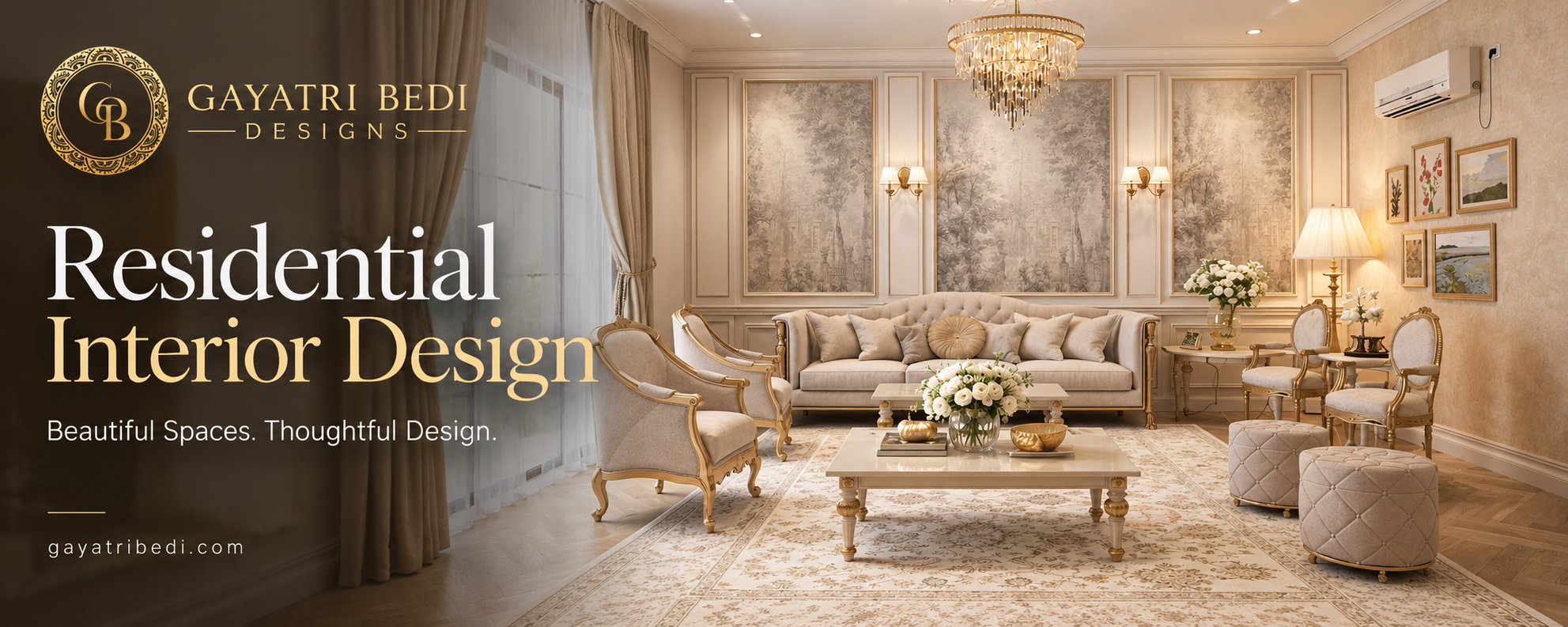
A home is much more than a physical space. It is where everyday routines unfold, families spend time together, memories are created, and personal preferences become part of daily life. The right interior design can transform an ordinary house into a comfortable, beautiful and meaningful living environment. This is why residential interior design plays such an important role in shaping modern homes.
Residential interior design brings together space planning, furniture selection, lighting, colours, materials, textures and decorative elements to create a balanced living experience. Every decision, from the placement of a sofa to the finish of a wardrobe, influences how a room looks and feels. A well-designed home should not only make a strong visual impression but also support the people who live in it.
At Gayatri Bedi Designs, the approach to thoughtful interior design centres on creating spaces that feel personal, considered and functional. The focus is not simply on adding beautiful furniture or following the latest trends. It is about understanding how people live, what they value, and how their surroundings can reflect their individuality. When design choices work together, the result is a home that feels welcoming, practical and timeless.
Whether you are planning a new apartment, renovating an existing house, or upgrading a luxury residence, a carefully developed interior design plan can make the entire process more organised and rewarding.
What Is Residential Interior Design?
Residential interior design is the process of planning and designing the interior spaces of homes to improve their appearance, functionality and comfort. It involves understanding the layout of a property, the needs of its occupants, the available space, and the relationship between different rooms.
Unlike commercial interiors, which often prioritise business operations and customer experiences, residential interiors focus on the everyday experiences of the people living in the space. A living room may need to accommodate family gatherings and entertaining, while a bedroom should encourage rest and privacy. A kitchen needs to support efficient movement and storage, and a dining area should feel comfortable for everyday meals as well as special occasions.
Successful residential interior design considers these different requirements before selecting colours, materials or furniture. This approach ensures that each room serves its purpose while contributing to the overall identity of the home.
A professionally planned interior also considers circulation, natural light, ventilation, storage, maintenance and long-term usability. These elements may not always be immediately noticeable, but they significantly influence the quality of daily life.
The Difference Between Decoration and Interior Design
Interior decoration and interior design are closely related, but they are not exactly the same. Decoration focuses primarily on the visual elements of a room, such as furniture, artwork, curtains, cushions and accessories. Interior design considers the complete experience of the space, including layout, functionality, lighting, materials and furniture proportions.
For example, purchasing a beautiful sofa may improve the appearance of a living room, but placing it without considering movement or viewing angles can make the room uncomfortable. A residential interior design plan evaluates the entire arrangement so that the sofa, tables, lighting and surrounding elements work together.
This is what makes thoughtful planning important. The goal is not to fill every corner but to create a harmonious environment in which every element has a purpose.
Why Residential Interior Design Matters for Modern Homes
Modern lifestyles require homes to perform several functions. A living room may also become a reading corner, a workspace or a place for entertaining guests. Bedrooms need to provide relaxation while accommodating storage, and kitchens must balance appearance with everyday practicality.
Residential interior design helps bring these requirements together without making the home feel crowded or visually confusing. A carefully planned layout can improve movement, create useful storage opportunities and establish a natural connection between different areas.
Another important benefit is personalisation. Every household has different habits, preferences and priorities. Some homeowners appreciate clean lines and understated colours, while others prefer expressive artwork, layered textures and distinctive furniture. Good design recognises these differences instead of applying the same formula to every property.
A well-designed home can also make better use of the available budget. Planning furniture dimensions, electrical points, lighting positions and storage requirements before execution can reduce unnecessary changes and avoidable purchases.
Ultimately, residential interior design is about creating a home that looks attractive while making everyday activities easier and more enjoyable.
Planning a Home That Reflects Your Personality
A beautiful home should feel connected to the people who live in it. Personal photographs, meaningful artwork, collected objects, favourite colours and carefully selected furniture can all contribute to a distinctive interior.
However, personalisation does not mean displaying everything at once. The strongest interiors often come from selecting a few meaningful elements and giving them enough space to stand out. When every wall, surface and corner competes for attention, the home can feel overwhelming.
Gayatri Bedi Designs reflects an approach to interiors in which the relationship between furniture, materials, lighting and decorative objects helps establish the character of a space. A thoughtfully selected statement chair, a sculptural table or a piece of artwork can introduce personality without making the room feel crowded.
Start by considering how you want your home to feel. Do you prefer a calm and understated environment, a warm and layered interior, or a more expressive space with bold details? Answering this question can help establish a consistent design direction.
It is also useful to consider how your preferences might evolve. Rather than investing in every passing trend, choose foundational finishes and larger furniture pieces that you expect to appreciate for years. Smaller accessories can introduce seasonal colours and new interests without requiring a complete redesign.
Creating a Consistent Design Language
A consistent design language connects the rooms of a home through colours, materials, furniture styles and decorative details. This does not mean every room must look identical. Instead, the spaces should share certain elements that make the home feel cohesive.
For example, warm wood finishes might appear in the living room, bedroom and dining area, while a recurring metal finish or a consistent colour palette creates visual continuity. Different rooms can still have their own personalities through artwork, textiles, lighting and furniture arrangements.
This balance between consistency and individuality is especially valuable in larger residences, where multiple rooms need to feel connected without becoming repetitive.
Residential Interior Design for Living Rooms
The living room often creates the first impression of a home. It is where residents relax, entertain guests, spend time with family and sometimes work or read. Its design should therefore balance visual appeal with comfort and practical use.
Furniture placement is one of the most important aspects of living room planning. The size of the sofa, the position of accent chairs, the dimensions of the coffee table and the distance between furniture pieces all influence how comfortably people can move through the room.
A large living room may benefit from separate seating arrangements that create distinct zones for conversation, reading or entertainment. In a smaller apartment, carefully proportioned furniture and an uncluttered layout can help the space feel more open.
Lighting also plays a significant role. Natural light can make the room feel welcoming during the day, while a combination of ceiling lights, floor lamps, table lamps and accent lighting creates flexibility in the evening. Artwork, textured wall finishes and carefully selected decorative objects can add depth without overwhelming the overall design.
Bespoke furniture can be particularly useful when standard furniture does not fit the dimensions or character of a room. A custom-designed console, sofa or coffee table can help create a more coherent arrangement while making better use of the available space.
Designing Comfortable and Elegant Bedrooms
A bedroom should offer privacy, comfort and a sense of calm. Its design needs to support rest while providing sufficient storage and accommodating the practical requirements of everyday life.
The bed usually acts as the central element of the room, so its size and placement should be considered early in the design process. There should be enough room to move around it comfortably, access wardrobes and use bedside tables without obstruction.
Colour selection can influence the atmosphere of a bedroom. Soft neutrals, warm earthy tones and muted shades often create a relaxed setting, while darker accents or richer colours can introduce depth when used thoughtfully. The right choice depends on the room’s natural light, dimensions and the homeowner’s preferences.
Storage should be integrated into the design rather than treated as an afterthought. Wardrobes, bedside drawers, dressing areas and concealed storage can help keep everyday belongings organised. In compact bedrooms, built-in solutions can make the available area more useful without introducing unnecessary furniture.
Textures contribute to the room’s comfort and visual richness. Upholstered headboards, soft bedding, curtains, rugs and carefully chosen lighting can create a layered appearance that feels inviting rather than overly decorative.
The goal is to create a bedroom that looks refined while remaining practical enough for everyday use.
The Importance of Bespoke Furniture in Residential Interiors
Furniture is one of the most influential elements of residential interior design because it affects both the appearance and functionality of a room. Its proportions, materials, finishes and construction contribute to the overall character of the home.
Bespoke furniture offers an opportunity to create pieces that respond to specific spatial requirements and personal preferences. Instead of adapting the entire room around standard furniture dimensions, homeowners can explore solutions designed for their layout, storage needs and aesthetic direction.
A custom dining table can be designed to suit the number of people who regularly use it. A bespoke sofa can accommodate a particular room configuration, while a custom wardrobe can make use of available height and width more effectively. These details are especially valuable in properties with unusual layouts, architectural features or specific functional requirements.
The value of bespoke furniture also extends to material selection. Wood, stone, metal, fabric and other finishes can be chosen to complement the architecture and establish a consistent design language throughout the home.
Gayatri Bedi Designs combines an interest in interiors and bespoke furniture, making furniture planning an important consideration when developing a residential environment. Thoughtful furniture selection can help create rooms that feel distinctive rather than assembled from unrelated pieces.
Quality should remain a priority throughout the process. Construction methods, hardware, upholstery, finishes and maintenance requirements all influence the durability of furniture. Investing in pieces that suit both the design and everyday use of a home can provide lasting value.
Choosing Colours, Materials and Textures
Colour and material selection can transform the atmosphere of a residential interior. They influence how spacious, warm, bright, calm or dramatic a room feels. A successful palette considers the architecture, natural lighting, furniture finishes and the intended mood of each space.
Neutral colours remain popular because they provide flexibility and work well with different furniture styles. Shades of cream, beige, taupe, grey and warm white can establish a balanced foundation. However, a neutral room does not need to feel plain. Texture, contrast, artwork and carefully selected accent colours can give it depth and personality.
Earthy colours, muted greens, terracotta tones and deep blues can introduce character without overwhelming the space. The important consideration is how these colours interact with the materials around them.
Materials should be selected according to both appearance and performance. Natural wood can introduce warmth, stone can add a sense of permanence, and fabrics can soften harder architectural surfaces. Glass and reflective finishes may help distribute light, while textured wall treatments can create visual interest.
Maintenance is equally important. Kitchens, bathrooms and frequently used living areas may require finishes that can withstand moisture, cleaning and regular use. A material that looks attractive in a photograph may not always be suitable for a particular household.
Sampling materials under the actual lighting conditions of the property can help homeowners make better decisions before finalising finishes.
Lighting: An Essential Part of Residential Interior Design
Lighting is not simply a technical requirement. It is an important design element that affects the appearance, comfort and functionality of every room.
A well-planned lighting scheme generally combines ambient, task and accent lighting. Ambient lighting provides overall illumination, task lighting supports activities such as reading or cooking, and accent lighting highlights artwork, architectural details or decorative objects.
Natural light should also be considered during the planning stage. Window treatments, furniture placement and the use of reflective surfaces can influence how daylight enters and travels through a room. Maintaining a suitable balance between natural and artificial lighting can make interiors feel more comfortable throughout the day.
In living rooms, layered lighting allows the atmosphere to change according to the activity. Bedrooms benefit from softer lighting near the bed, while kitchens require sufficient illumination around worktops and preparation areas. Bathrooms need appropriate lighting around mirrors and practical areas.
Decorative lighting can also become a visual feature. Pendant lights, sculptural chandeliers and distinctive wall fixtures may contribute to the identity of a room when selected in proportion to its size and style.
The best lighting plans consider the position of electrical points, switches, controls and fixtures before installation begins. This coordination can improve convenience and reduce the need for changes during execution.
Smart Space Planning for Small and Large Homes
Every property presents different design opportunities and challenges. Smaller homes require efficient use of available space, while larger residences need careful planning to avoid empty, disconnected or underutilised areas.
In compact apartments, multi-functional furniture can make a significant difference. Storage beds, extendable dining tables, built-in wardrobes and furniture with concealed compartments help accommodate daily needs without overcrowding rooms. Clear circulation paths and appropriate furniture proportions can also make smaller spaces feel more comfortable.
Mirrors and carefully positioned lighting may enhance the perception of space, but they work best when supported by an effective layout. Simply adding mirrors or choosing light colours cannot compensate for furniture that is too large or poorly arranged.
Larger homes present a different challenge. Generous floor areas can accommodate multiple seating zones, dedicated reading spaces, home offices and separate entertaining areas. However, these spaces need visual connections so that the home feels cohesive.
Rugs, lighting arrangements, furniture groupings and artwork can help define individual zones without requiring physical partitions. A considered approach ensures that each area has a purpose while remaining connected to the wider interior.
Good space planning begins with understanding how residents move through their home and what they need from each room.
Integrating Art and Decorative Elements
Art and decorative objects can give a home a distinctive identity. They introduce colour, texture, emotion and personal meaning, allowing interiors to communicate something about the people who live there.
Artwork can be used as a focal point above a sofa, at the end of a corridor or within a carefully composed entrance area. Sculptures, ceramics, books and collected objects can add character to shelves, consoles and tables.
The key is to create a thoughtful arrangement. A large artwork may need an uncluttered wall to make its impact, while a collection of smaller pieces can be arranged to establish rhythm and visual balance. Decorative objects should complement the room rather than compete with its main architectural and furniture elements.
Personal collections can be especially effective because they make a home feel individual. Travel souvenirs, inherited objects and meaningful photographs often carry a significance that cannot be replicated through generic decoration.
A considered residential interior design approach allows these objects to become part of the overall composition. The result is a home that feels curated but still comfortable and lived in.
Sustainable and Timeless Residential Interior Design
Homeowners increasingly value interiors that remain useful and attractive over time. Sustainable design supports this goal by encouraging thoughtful material selection, durable construction, energy-conscious lighting and reduced waste.
Rather than replacing furniture whenever trends change, homeowners can prioritise pieces with lasting appeal and dependable construction. Repairable furniture, responsibly sourced materials and finishes suited to the local climate can contribute to a more considered approach.
Natural light and ventilation should also be incorporated wherever the building permits. Energy-efficient lighting and appropriate window treatments can improve comfort while helping manage energy consumption.
Timeless design does not require avoiding contemporary ideas. It means balancing current preferences with choices that are likely to remain relevant. Architectural details, well-made furniture, balanced proportions and a coherent colour palette can provide a foundation that adapts to changing needs.
Decorative accessories and smaller elements can be updated over time without requiring major renovations. This approach can make maintaining a beautiful home more practical and cost-effective in the long term.
How to Plan a Residential Interior Design Project
A successful residential project begins with a clear understanding of the property, the people who will use it and the desired outcome. Before choosing finishes or furniture, homeowners should establish their priorities, preferred design direction and approximate budget.
The next stage involves evaluating the existing layout, identifying functional requirements and preparing a space plan. Measurements, furniture dimensions, storage needs, electrical requirements and lighting positions should be considered together to avoid conflicts later.
Material and furniture selections can then be developed around the agreed design direction. Comparing samples, understanding maintenance requirements and confirming product dimensions helps ensure that individual choices work well as a complete scheme.
Execution requires coordination between the design, procurement and installation stages. Depending on the project’s scope, this may involve carpentry, electrical work, painting, flooring, furniture production and decorative installation. A clear schedule and defined responsibilities can make the process more manageable.
It is also important to review progress at appropriate stages and resolve questions before work moves forward. Final checks should cover functionality, finishes, furniture placement, lighting and any remaining adjustments.
Working with an interior design professional can help bring these decisions together through a more structured process. The exact services offered will depend on the project, so homeowners should clarify the scope, timeline, budget and deliverables before work begins.
Why Consider Gayatri Bedi Designs for Your Home?
Choosing an interior design professional is an important decision because the designer’s approach can influence how your home looks, functions and feels for years to come. Beyond visual style, homeowners should consider design thinking, communication, furniture expertise, attention to detail and the ability to understand individual requirements.
Gayatri Bedi Designs focuses on interior design and bespoke furniture, offering an approach that recognises the relationship between spatial planning, furnishings and personal expression. This relationship is valuable when creating interiors in which the furniture, finishes, artwork and architectural elements feel connected.
Every home has different requirements. A family residence may need practical storage and flexible common areas, while a luxury apartment may prioritise material detailing, distinctive furniture and carefully composed spaces. The right design approach should respond to these differences rather than rely on a standard template.
When exploring a project with Gayatri Bedi Designs, homeowners can discuss their preferred aesthetic, lifestyle requirements, functional priorities and project expectations. Reviewing relevant portfolio work and clarifying the scope of services can help establish whether the design approach is appropriate for their needs.
The ultimate objective of residential interior design is to create a home that feels authentic to its residents. Beautiful finishes matter, but so do comfort, usability, proportion and the details that make everyday life easier.
Conclusion: Creating a Home That Feels Truly Yours
Residential interior design is an opportunity to shape a living environment around personal preferences, practical requirements and long-term aspirations. From the arrangement of furniture to the selection of lighting, colours, textures and artwork, every decision contributes to the experience of a home.
A successful design does not depend on the size of the property or the number of decorative elements used. It depends on how thoughtfully the space is planned, how effectively its different elements work together, and how well it responds to the people who live there.
By prioritising functionality, bespoke furniture, considered materials and individual expression, homeowners can create interiors that remain comfortable and visually appealing over time.
Gayatri Bedi Designs brings together residential interiors and bespoke furniture as part of a design approach focused on creating distinctive living spaces. Whether you are planning a new home or transforming an existing one, thoughtful planning can help turn your ideas into a cohesive and meaningful environment.
